
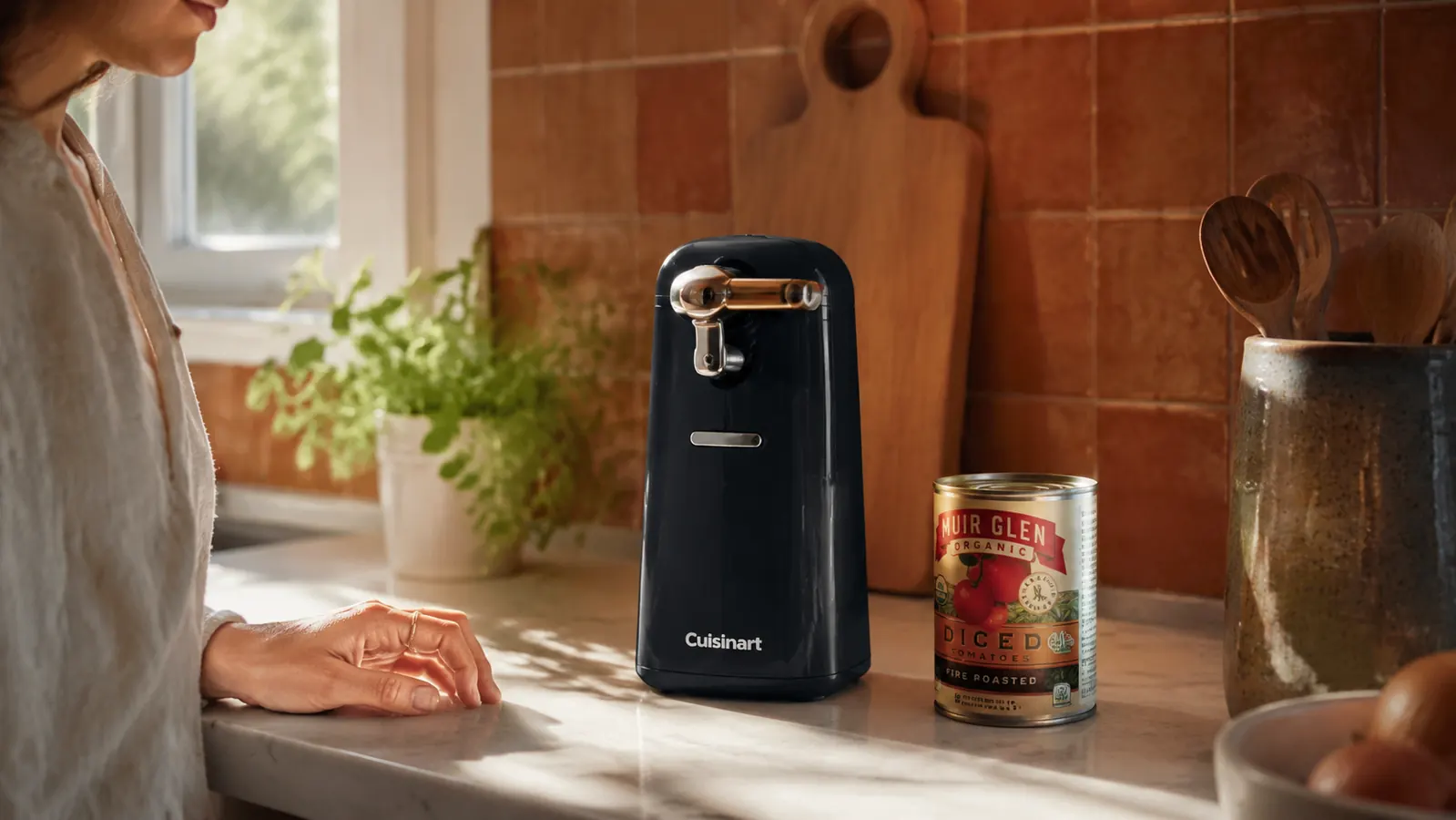
Two years ago I was making a big pot of minestrone and I had seven cans to open: diced tomatoes, cannellini beans, kidney beans, vegetable broth, tomato paste, corn, and green beans. By can four my right wrist was aching badly enough that I had to switch to my left hand to finish. I have early-stage arthritis in both hands, diagnosed in the fall of 2023, and that minestrone night was the moment I finally admitted a manual can opener was no longer the right tool for my kitchen. The Cuisinart electric can opener, model CCO-50BKN, was the first one I tried. Two years and well over three hundred cans later, I have a clear-eyed view of what it does well, where it falls short, and who should buy it.
I want to be upfront: I cook dinner from scratch almost every night. Canned goods are not an occasional backup in my kitchen, they are a daily staple. So when I say I have used this opener heavily, I mean it has earned that claim.
The Quick Verdict
A genuinely reliable electric can opener that earns its counter space, especially if grip pain or arthritis makes manual openers a daily frustration.
Amazon Check Today's Price →If opening cans hurts your hands, this is the upgrade your kitchen actually needs.
The Cuisinart electric can opener has over 63,000 ratings on Amazon for a reason. Check the current price and see if it fits your counter.
Amazon Check Today's Price on Amazon →How I've Used It
My typical week involves at least three or four cooked dinners that call for canned goods. Soups, stews, chilis, bean salads, pasta sauces, curries. I also bake with canned pumpkin and use canned coconut milk regularly. The Cuisinart lives on my counter to the right of the stove, plugged in and ready. I do not store it in a cabinet between uses because that would mean I would stop using it, and that would be a mistake.
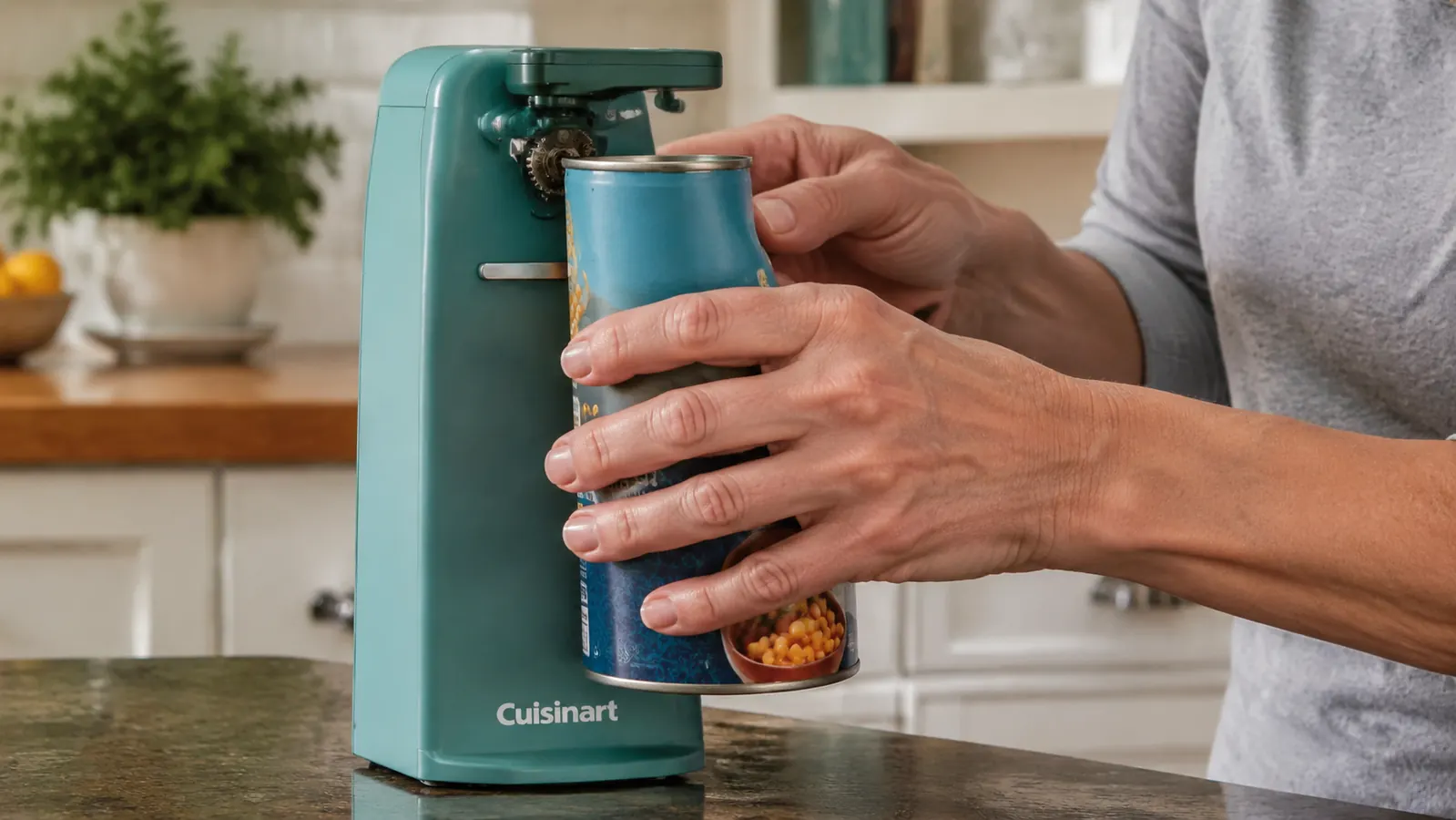
The one-touch operation is exactly what the name suggests. You position the can under the cutting wheel, press the lever down until the magnet grips the lid, and press the single button. The opener drives itself around the rim and stops when it comes back to the starting point. You lift the lid out using the built-in magnet. No sawing, no cranking, no wrist rotation required. For someone with arthritis, that matters more than almost any other feature on this list.
In two years I have had exactly two incidents where the opener stalled partway around a can: once on a dented can I probably should not have used at all, and once on an off-brand canned tomato with a slightly thicker rim than usual. Both times I pressed the button again and it completed the cut on the second pass. I would not call those failures.
Motor and Build Quality After Two Years
The motor has not slowed down noticeably. It runs at the same pace it did when I took it out of the box. The plastic housing has held up without cracking or yellowing, which I appreciate because my kitchen gets real sun in the afternoon. The cord is about 26 inches long, which is enough to reach my nearest outlet without stretching, though barely. If your counter layout is tight, measure before you assume the cord will reach.
The cutting wheel is a small hardened steel blade that engages the side of the lid rather than the top. This is a smooth-edge cut, not a sharp-edge cut. The lids that come off this opener do not have the jagged teeth you get from a traditional manual opener, and the cans themselves do not have sharp internal edges either. I have reached into cans after opening without getting cut, which is something I cannot say about my old manual opener.
The only visible wear on mine after two years is a small amount of discoloration on the cutting wheel from tomato acids. It does not affect performance. The wheel still grips and cuts cleanly.
Seven cans into a minestrone session with arthritic hands, the difference between a manual opener and this one is not a small quality-of-life improvement. It is the difference between finishing dinner and giving up.
Cleaning: The Part Nobody Warns You About
Here is where I will be blunt. The Cuisinart CCO-50BKN is not the easiest appliance to clean, and if that is a dealbreaker for you, you should know it going in. The cutting assembly, which includes the wheel and the drive gear, detaches from the body for rinsing. Cuisinart says it is dishwasher safe and I believe that in principle, but in practice I hand-wash it every time because the tiny crevices around the gear collect residue and I do not trust the dishwasher to reach them.
My routine takes about 90 seconds. I detach the cutting arm, rinse it under hot water while scrubbing the wheel with a small bottle brush, rinse the magnetic lid holder separately, and let everything air dry before reattaching. Once a month I run a damp cloth over the body housing to catch any tomato splatter that drifted back from the can. That is the total maintenance load. Ninety seconds after each use is a fair trade for never having to crank a manual opener again.
I have seen one-star reviews on Amazon from people who say the cutting wheel corroded. Mine has not, and I believe the difference is drying the detachable parts before reassembly. If you put them back wet, you will get mineral deposits and eventually rust. Dry them first.
Performance on Different Can Sizes and Styles
The opener handles standard 14.5-ounce and 28-ounce cans without any issues. It also handles the smaller 5.5-ounce tomato paste cans and the taller 48-ounce cans (the ones I use when I make big batches of broth) just fine. The magnet is strong enough to hold the large lids without dropping them into the food.
Where it does not work: pop-top cans that have a pull-ring already built in do not need it, obviously, but it also will not work on cans with irregular rims, such as some European sardine tins, or on the smaller aluminum cans like cat food pulls. For those you still need your manual opener or a different tool. In my kitchen those edge cases come up maybe twice a month, and I keep a basic manual opener in a drawer for exactly that purpose.
One design choice I genuinely appreciate: the opener stays put while it runs. It does not walk or spin on the counter. The rubber feet grip well on both tile and butcher block, so you are not chasing it around while it works. Small detail, but it matters when your hands are already occupied holding a hot pan or rinsing something else.
How It Helps with Arthritis and Grip Issues
I want to spend a moment on this because it is why I bought the opener in the first place and it is likely why many people reading this are considering it. The manual can opener requires two distinct grip actions that are hard on arthritic hands: the pinching grip to hold the handles together, and the rotational force to turn the crank. Both put stress on the small joints of the fingers and the tendons of the wrist.
The Cuisinart removes both of those demands. Positioning the can requires a light two-handed carry, nothing more. Engaging the lever requires pressing down with your palm, not squeezing with your fingers. Pressing the button is one gentle push. If your grip strength is limited or if squeezing makes your fingers ache, this opener is a meaningful reduction in daily pain load. I noticed it most in winter, when my joints are stiffer, and on evenings when I had already done a lot of prep work and my hands were tired.
My neighbor, who is 71 and has more severe arthritis than I do, tried it when I had her over for soup and immediately asked me to send her the link. She bought it the same week. That is the kind of product endorsement I trust more than anything I could write.

What I Would Change
The cord length is my main complaint, and I mentioned it already, but I want to emphasize it because it shaped where I had to put the opener on my counter. Twenty-six inches is not a lot of reach. If your nearest outlet is not close to your prep area, you may end up either using an extension cord or compromising on placement.
The body is also entirely plastic, which gives it a slightly budget feel compared to the price point. It does not rattle or flex in a way that suggests it will break, but if you pick it up expecting the heft of stainless steel, you will be surprised. For what it is, the plastic is fine. I just want to set accurate expectations.
The third gripe is the noise. It is louder than I expected for a motorized appliance this small. Not so loud that it wakes the dog, but loud enough that I would not run it at 6 a.m. in an apartment with thin walls. It is a low-pitched motor hum that lasts about five to eight seconds per can. I have gotten used to it, but I noticed it every time in the first few weeks.
What I Liked
- One-touch operation eliminates the grip and crank motion that strains arthritic hands
- Smooth-edge cut means no sharp lid edges or jagged can rims
- Strong magnet holds the lid cleanly above the food after cutting
- Motor has run consistently for two years without slowing or stalling
- Stays put on tile and butcher block, no chasing it around the counter
- 63,000-plus ratings on Amazon give it one of the strongest track records in its category
- Cutting arm detaches for rinsing, making cleanup manageable
Where It Falls Short
- Cord is only about 26 inches, limiting placement options near outlets
- Full plastic body feels lighter than the price suggests
- Noticeably louder than most manual openers, audible in a quiet kitchen
- Detachable parts must be dried before reassembly to prevent corrosion
- Does not work on irregular-rim cans, sardine tins, or very small cat-food-style cans
Who This Is For
The Cuisinart electric can opener makes the most sense for home cooks who open more than a handful of cans per week, especially if grip pain, arthritis, or hand fatigue is already part of daily cooking life. It is also a genuinely good choice for anyone who has struggled with cheap manual openers that slip, rust, or require two hands and real leverage to get through thick can rims. At around twenty-five dollars, it is not the cheapest gadget on the shelf, but it is priced well below the clutter-worthy impulse buys that usually end up in the donation box.
If you batch-cook on weekends and routinely open six, eight, or ten cans in a single session, the time savings are real. You will also notice less hand fatigue at the end of those sessions, which means you may actually have the energy to clean up properly instead of leaving things for the morning.
Who Should Skip It
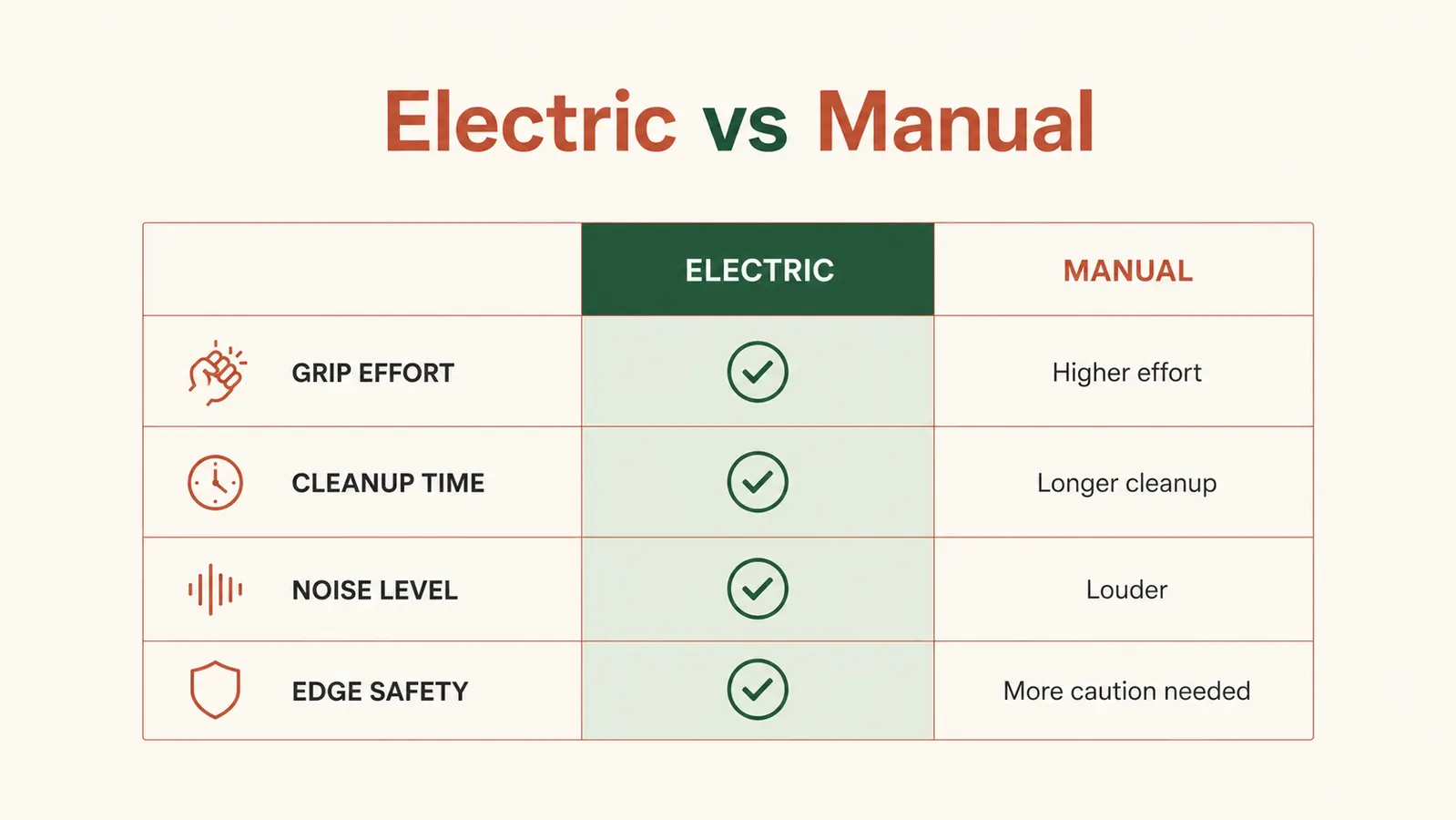
If you open one or two cans a week and your hands are fine, a good manual opener is smaller, quieter, cheaper, and easier to store in a drawer. There is no reason to dedicate counter space to an electric appliance that solves a problem you do not have. I would also steer away anyone who hates counter appliances on principle. This opener is best when it lives on the counter, ready to use. If it goes in a cabinet, you will forget it exists and reach for the manual opener out of habit. If drawer and counter space is tight, read the comparison guide I put together between electric and manual openers before you commit: it covers the tradeoff in detail.
I would also skip it if the cord length issue is a genuine dealbreaker based on your outlet placement. Measure before you buy.
Two years in, I would buy this again without hesitation.
The Cuisinart electric can opener is one of those small kitchen upgrades that earns its counter space every single week. If arthritic hands, grip fatigue, or just a hatred of manual cranking brought you here, the 63,000 people who left reviews on Amazon are pointing in the same direction. Check the current price and see if it fits your kitchen.
Amazon Check Today's Price on Amazon →