
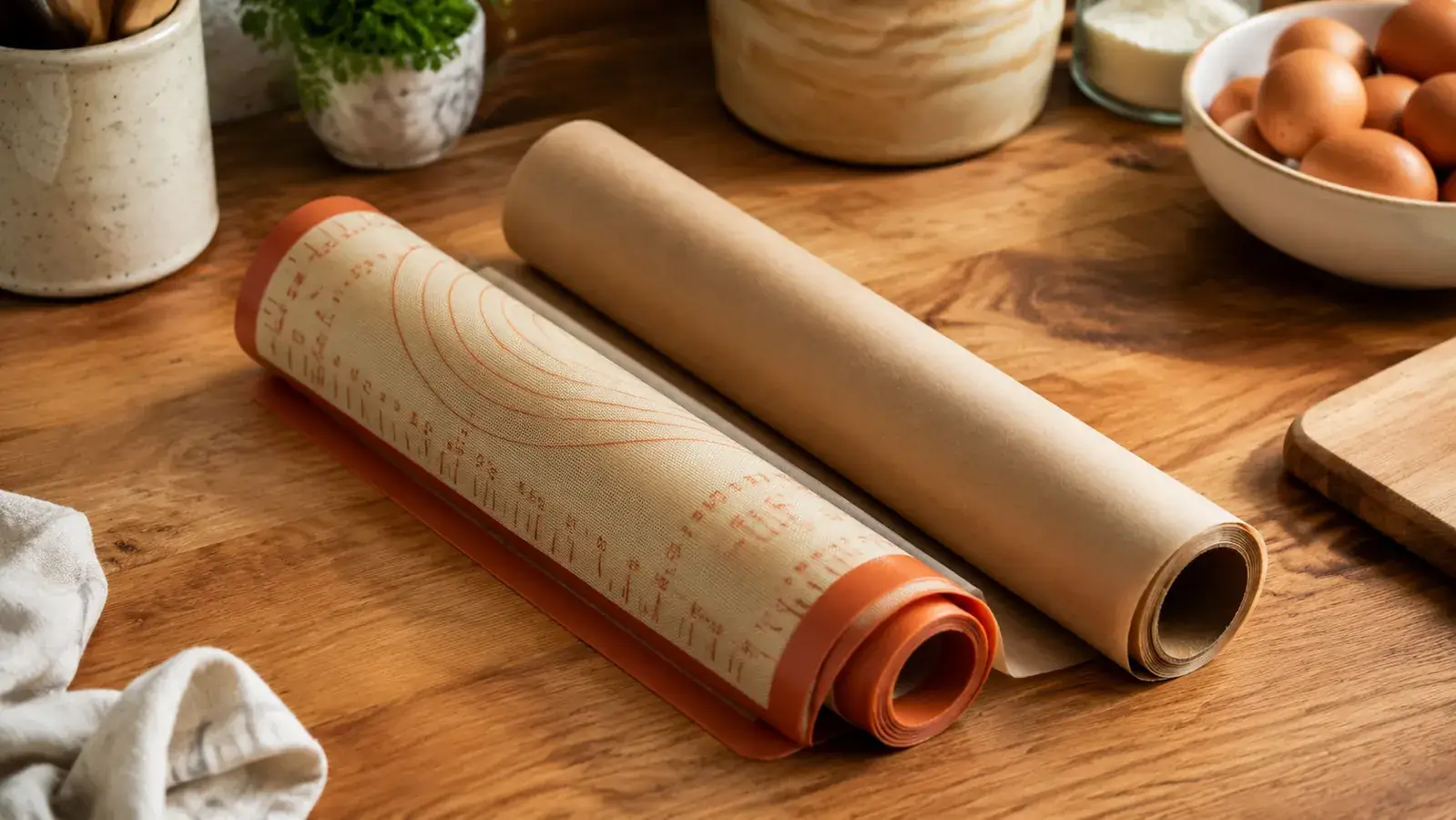
Every time I reach into the drawer for parchment paper and find a half-used roll that has unspooled itself across three other tools, I think about the silicone baking mat sitting on the shelf above. These two things do the same basic job: keep food from sticking to your pan. But they do it differently, they cost differently, and they perform differently depending on what you are baking. After using both for years in my own kitchen, I want to give you a straight comparison so you can make the call that fits how you actually cook, not just the one that sounds most eco-friendly or most convenient in the abstract.
The short answer is this: if you bake cookies, roast vegetables, or line a sheet pan more than a few times a week, a silicone mat pays for itself fast and stops the cycle of buying paper rolls. If you bake rarely, cook at very high heat, or need something you can crumple into an awkward pan shape, parchment still has a real role. The sections below walk through every dimension that matters before the buying decision.
| Silicone Baking Mat | Parchment Paper | |
|---|---|---|
| Cost Over Time | One-time purchase; reusable 2,000+ times, cost drops to fractions of a cent per use | Moderate per-sheet cost; expenses accumulate quickly for frequent bakers |
| Max Heat Tolerance | Up to 480 degrees F per manufacturer spec; suitable for most home baking temps | Typically 420-450 degrees F depending on brand; some unbleached versions rate lower |
| Non-Stick Performance | Consistent release every time; no greasing ever needed | Good non-stick but can tear or stick with caramelized sugar or very sticky dough |
| Cookie Bottom Browning | Even, gentle browning; slight insulating effect reduces scorched bottoms | Slightly faster direct browning; less buffer between cookie and hot pan surface |
| Cleanup | Rinse under warm water or run through the dishwasher; reusable indefinitely | No cleanup needed; throw it away after each use |
| Flexibility and Pan Fit | Pre-sized for half-sheet pans; does not fit round cake pans, loaf tins, or small trays | Cut or fold to fit any pan shape; works in round, square, or irregular bakeware |
| High-Heat Roasting (450 F and above) | Safe up to 480 F; slight insulating layer may reduce crisping on very high-heat tasks | May discolor or smoke near upper limit; still functional at 450 F on most brands |
| Broiler Use | Not safe under a broiler; keep it below the direct heat element | Not safe under a broiler; paper burns under direct broiler heat |
| Waste and Environmental Impact | Zero weekly waste; one mat replaces hundreds of single-use sheets over its lifetime | Paper waste on every baking session; compostable and unbleached brands are better but still disposable |
Where the Silicone Mat Wins
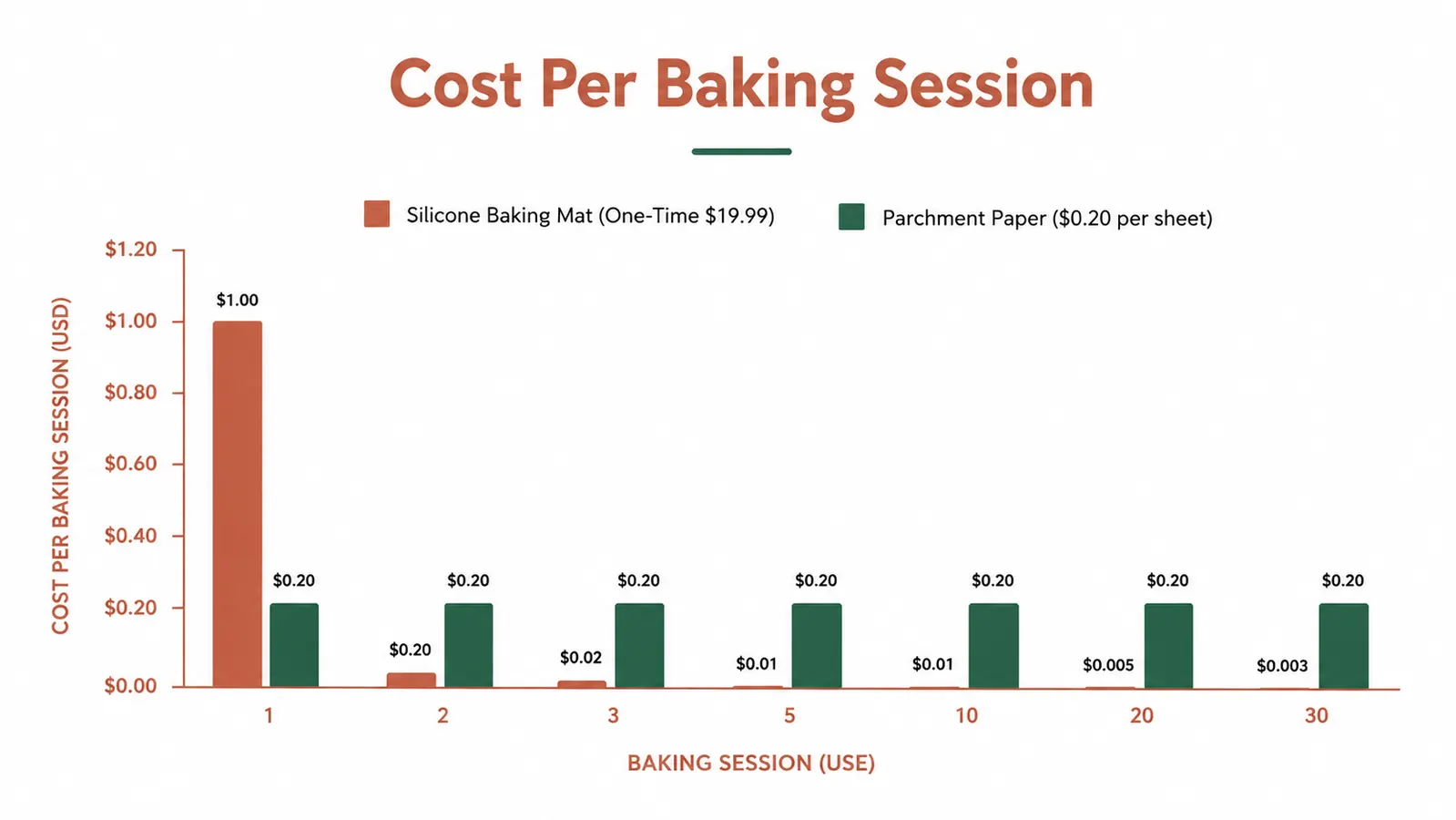
The cost argument is the clearest win and the one that convinces most home cooks to switch. The Amazon Basics silicone baking mat runs around $12 and is rated for over 2,000 uses. If you bake three times a week, that is more than twelve years of use before the mat owes you anything. Parchment paper at roughly $0.20 a sheet adds up to around $30 a year at the same frequency, which means the silicone mat pays for itself inside five months. I tracked my own paper usage for a stretch and was genuinely surprised at what I was spending just to throw it in the trash.
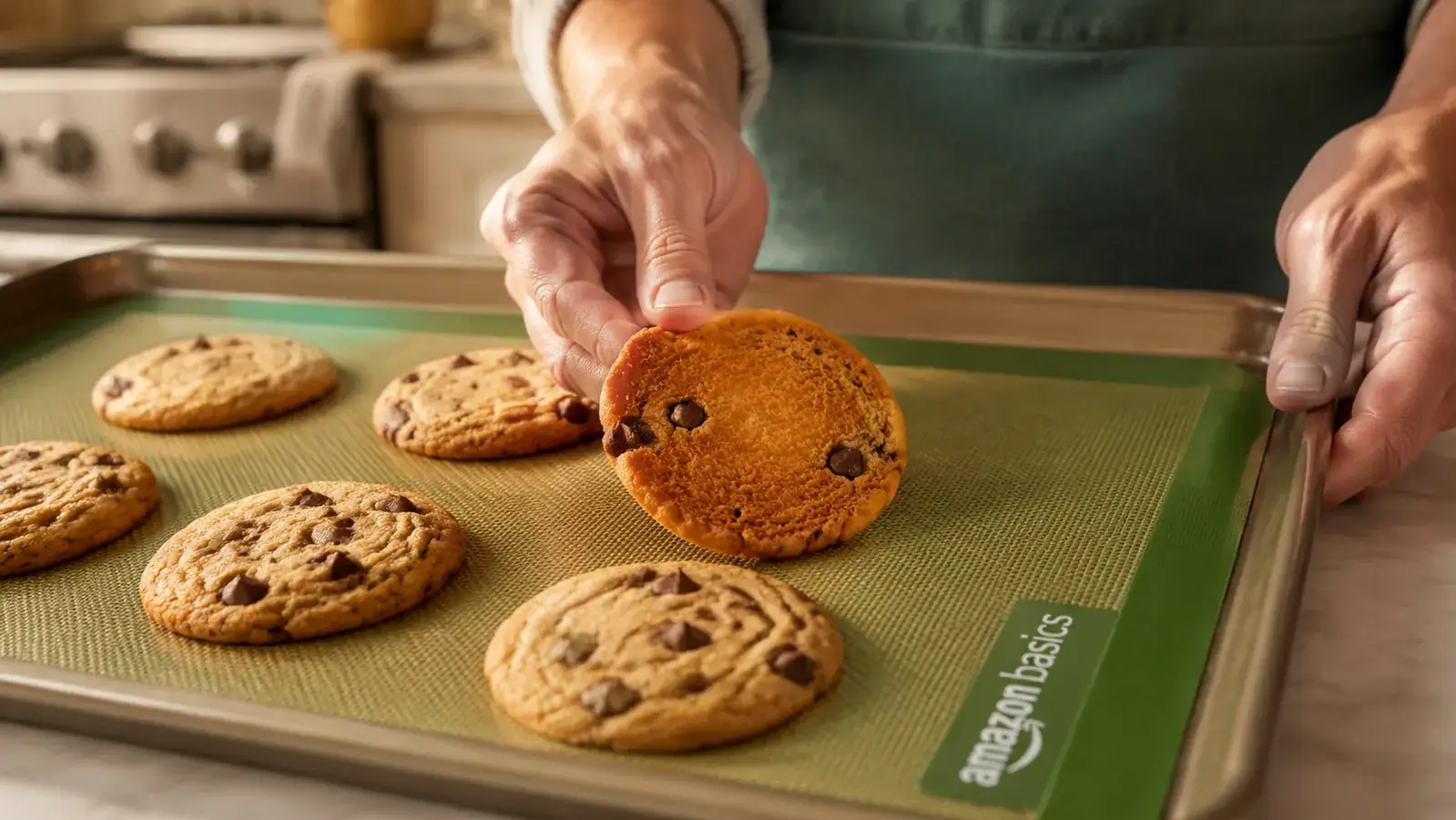
For cookies, the silicone mat delivers a meaningfully better result in most home ovens. The slightly insulating quality of silicone means the bottoms of your cookies bake more gently, which is exactly the difference between golden and scorched when you are running at 375 F with thin dough. I have baked the same chocolate chip recipe on parchment and on the Amazon Basics mat in the same oven at the same temperature, and the mat consistently produces more even browning with less risk of overdone bottoms along the edges of the pan. If your oven runs hot in the corners, this effect is even more pronounced.
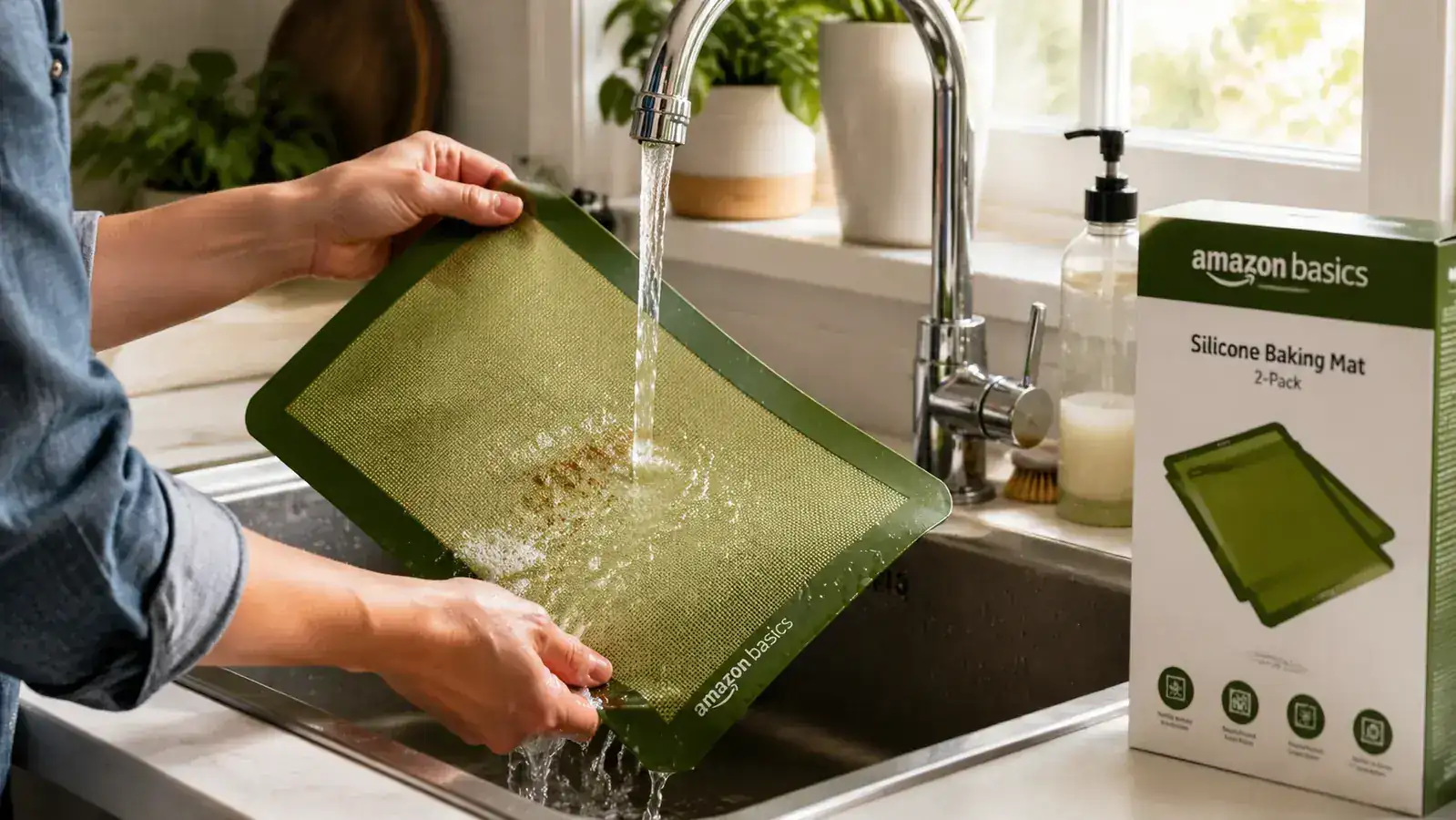
Cleanup is another real win for daily use. After a cookie bake, I rinse the mat under warm water, run a sponge across it once, and hang it over the dish rack. Thirty seconds. After a roasting session with vegetables, it goes in the dishwasher. There is no paper to fold up and toss, no searching for a new sheet before the next bake, and no mid-session discovery that you grabbed the last piece three weeks ago and forgot to buy more.
The environmental angle is real too, even if it is not the main reason most people buy. Over a couple of years of regular baking, one silicone mat replaces several hundred sheets of parchment paper. For a household that bakes a lot, that is a meaningful reduction in paper waste without any sacrifice in performance. It is a win that arrives quietly, batch by batch.
Where Parchment Paper Wins
Parchment's biggest advantage is flexibility, in every sense. You can tear off a sheet and press it into a round cake pan, fold it to line a loaf tin, crumple it into a casserole dish, or cut it to fit a muffin ring. Silicone mats come pre-sized for a standard half-sheet pan, which is 13 by 18 inches. If your pan is a different shape or size, the mat simply does not fit. No amount of trimming will help because you cannot cut a silicone mat and have it behave the same way afterward. If you do a lot of cake baking, quick breads, or any recipe that calls for a pan shape other than a standard sheet pan, you will still need parchment regardless of what else you own.
Parchment also holds a small edge for very high-heat roasting and for techniques where maximum surface contact matters. When you are roasting at 450 F and want real caramelization on the cut side of your vegetables, the slight thermal insulation of a silicone mat can soften the crust you are going for. Parchment lies flatter, conducts heat more directly from the pan, and gets out of the way. For thin-crust pizza on a sheet pan, I still reach for parchment when I want a crisper bottom. The mat's upper limit of 480 F per the Amazon Basics spec is plenty for most baking, but always check the rating on whatever mat you buy before going above 450 F.
There is also a straightforward convenience case for occasional bakers. If you bake twice a month, you likely already have parchment in the drawer and the mat becomes a slower payoff item. Storing a large flat mat in a small kitchen is a real consideration too. The mat does not fit neatly in a utensil drawer and tends to curl if you try to fold it. Most people end up rolling it and leaning it against the backsplash or storing it flat under a cutting board. Neither is a deal-breaker, but it is worth thinking about before you buy.
If you bake cookies more than once a week, the silicone mat has already paid for itself in your head.
The Amazon Basics mat is rated 4.7 stars across more than 25,000 reviews, costs in the budget range, and goes straight in the dishwasher when you are done. Check today's price before you reach for another roll of parchment.
Amazon Check Today's Price on Amazon →The silicone mat paid for itself in three months of cookie baking. Now the parchment roll lives in the drawer mostly for cake pans and bread loaves.
How Each One Handles Common Baking Tasks
Cookies and drop biscuits are the silicone mat's home turf. Even heat distribution, consistent non-stick release, and the gentle bottom-browning effect make it the better choice for most ovens and most recipes. Parchment works fine too, but the mat is noticeably better if you have ever had cookies stick to parchment in spots, or burn on the bottom before the centers were fully set.
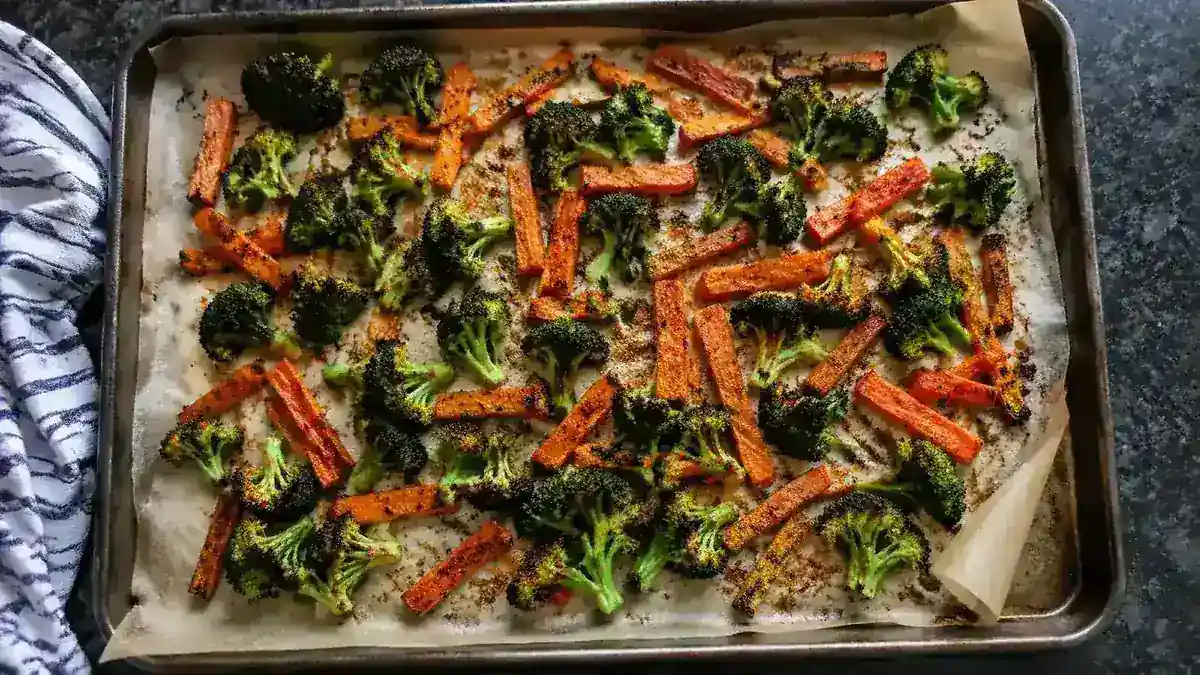
Roasted vegetables at 400-425 F are essentially a toss-up. Both work well. I default to the mat because I do not have to pull out a new sheet, and broccoli, cauliflower, and potatoes all release cleanly without any oil directly on the mat. If I am going above 425 F and want maximum caramelization, I sometimes skip both and oil the pan directly, letting the food make full contact with the hot metal.
Sheet pan dinners with saucy proteins are where parchment earns its place even for mat owners. Heavy marinades and sticky glazes can stain a silicone mat over time. The mat still releases fine and performs well, but the discoloration is permanent and bothers some people. Parchment is disposable, so the cleanup question disappears entirely. I use parchment for saucy chicken thighs, glazed salmon, and anything with a teriyaki-style sauce for exactly this reason.
Bread baking is a category where neither is the right primary tool. A Dutch oven needs no liner, and most bread recipes involve higher temps, steam, and a scored dough surface where neither parchment nor a mat adds much. The one exception is using parchment as a sling to lower a proofed boule into a hot Dutch oven without burning your hands, which is genuinely useful and something a silicone mat cannot replicate. Keep a roll in the drawer for that job regardless of what else you decide.
Who Should Buy Which
Get the silicone mat if you bake cookies, make sheet pan meals, or roast vegetables regularly on standard half-sheet pans. You will recover the cost quickly, clean up faster, and stop running out of parchment at the wrong moment. The Amazon Basics mat at a budget price is as good a starting point as any. With 4.7 stars across more than 25,000 buyers and a simple non-stick surface that needs nothing special to maintain, it does the job without asking you to think about it. Check today's price using the link below.
Keep parchment paper around even after you buy a mat. You will still need it for round cake pans, bread baking, very high-heat roasting, and any recipe where the pan shape does not match your mat. Think of parchment as the flexible backup and the silicone mat as the daily workhorse for your standard sheet pan work. Owning both costs very little and covers every baking scenario in a home kitchen.
One more thing worth saying: if you are considering the Amazon Basics mat specifically and wondering whether it is worth buying over a Silpat (the French professional brand that many serious bakers treat as the benchmark), the honest answer is that for home use the performance difference does not justify the price gap. Silpat uses a slightly different fiberglass-reinforced silicone construction and has a decades-long track record in commercial kitchens, but for baking cookies, roasting vegetables, and lining sheet pans at home, the Amazon Basics mat holds up and costs a fraction of the price. For a deeper look at how this specific mat performs over months of real use, see the long-term review here. And if burnt cookie bottoms are the reason you landed on this page, the step-by-step guide on how to stop cookies from burning walks through exactly how to use the mat to fix that problem.
Ready to stop buying parchment paper every month?
The Amazon Basics silicone baking mat covers 99% of what a home baker needs from a sheet pan liner. One purchase, years of daily use, dishwasher safe. Check today's price on Amazon and see what thousands of home cooks already figured out.
Amazon Check Today's Price on Amazon →