
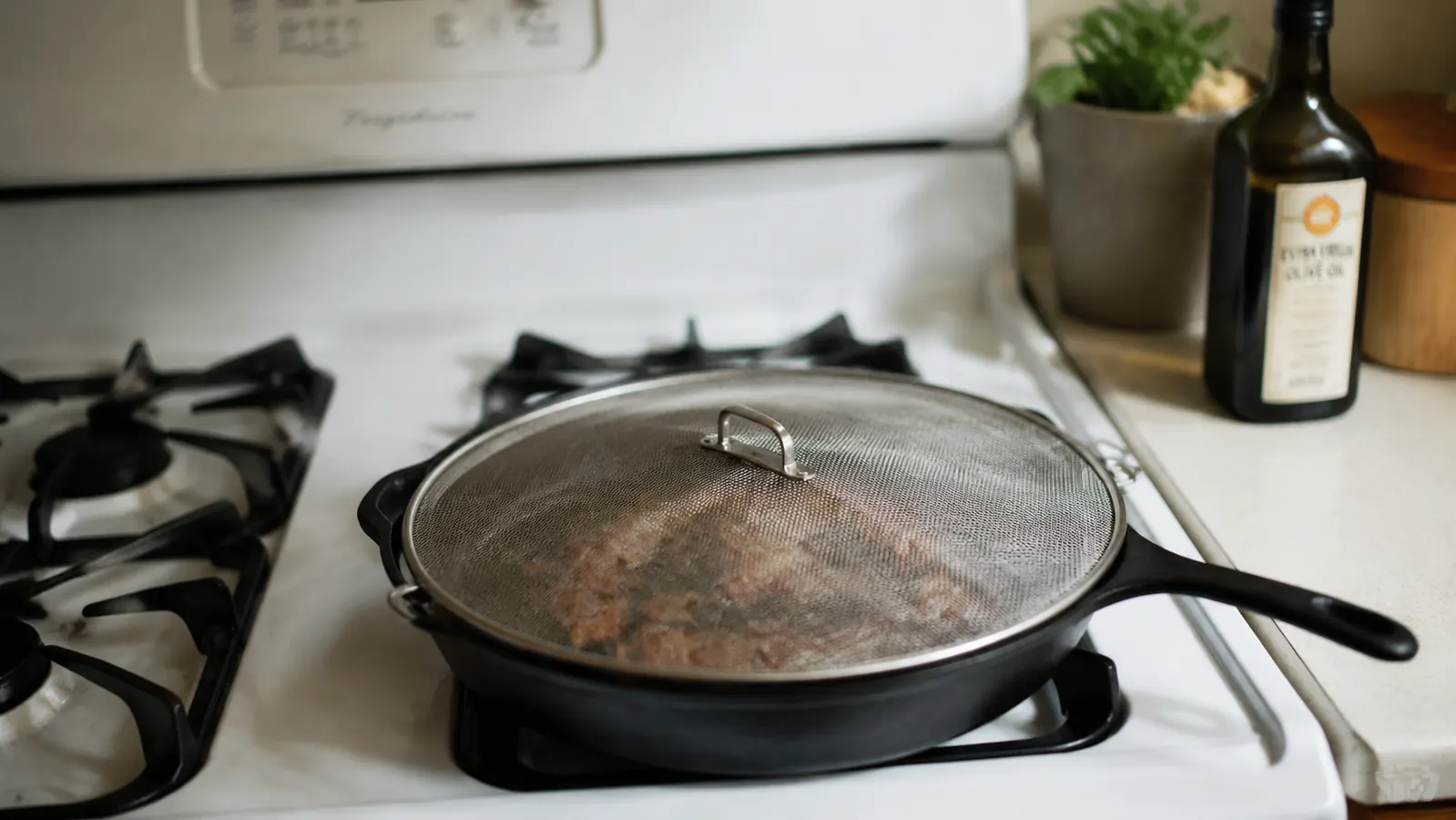
Every time I fry bacon or sear chicken thighs, I used to face the same decision: grab the pan lid and deal with soggy skin, or leave the pan open and spend ten minutes scrubbing the stovetop. For years I did both interchangeably without thinking much about it. Then I started paying attention to the actual results, and the difference turned out to be much bigger than I expected. The U.S. Kitchen Supply stainless steel splatter screen set is what finally changed my routine, and in this comparison I want to lay out exactly what each approach does well and where it falls short so you can make the right call for the food you actually cook.
The short answer: a splatter screen wins for anything you want browned and crispy. A pan lid wins when you specifically need to steam or finish cooking through with trapped heat. For most weeknight frying, those are very different goals, and using the wrong tool costs you either a messy stovetop or a plate of soft, steamed food instead of the crispy result you were after.
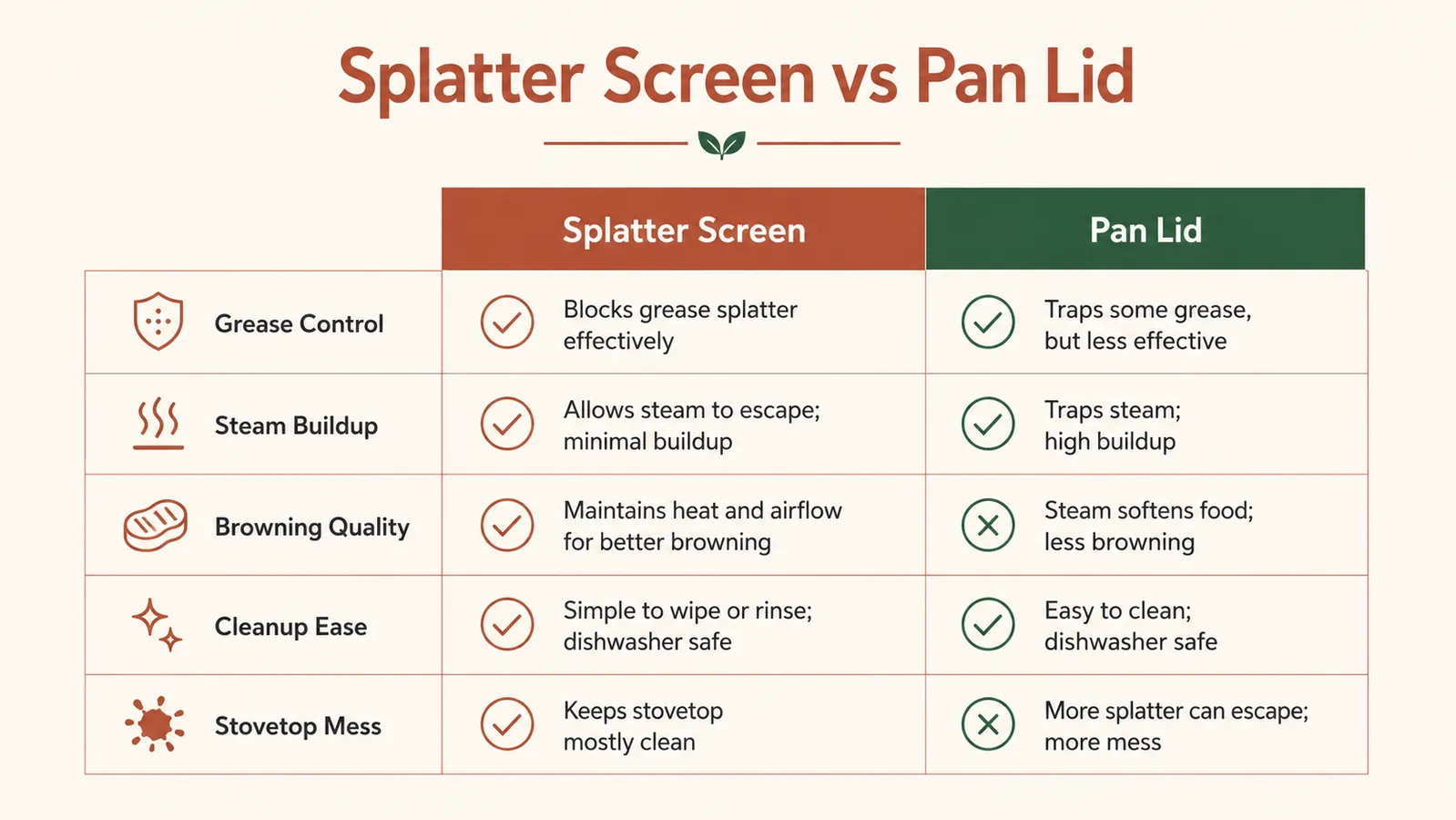
| Splatter Screen | Pan Lid for Frying | |
|---|---|---|
| Grease Control | Catches up to 95% of splatter through fine stainless mesh | Blocks splatter only while seated; any tilt sends grease off the edge |
| Steam Handling | Vents steam freely so food stays dry and browns properly | Traps steam inside the pan, raising interior humidity and softening food |
| Browning / Crispness | Excellent; bacon, chicken skin, and eggs all brown as intended | Compromised; trapped steam prevents the Maillard reaction from finishing |
| Stovetop Mess | Minimal; mesh absorbs most grease before it can reach the cooktop | Moderate to heavy if lid is removed mid-cook; condensation drips back into oil |
| Versatility | Works on any pan regardless of shape; set of 3 covers all common sizes | Must match pan diameter exactly or it gaps and leaks grease |
| Cleanup | Dishwasher safe; grease wipes off mesh easily if hand-washed | Interior of lid coats with condensed grease and requires scrubbing |
| Handle Heat | Long stay-cool handle stays comfortable at stovetop temperatures | Knob or handle heats up quickly over high heat, often requires a potholder |
| Storage | Flat mesh design stores vertically in a drawer or hangs on a hook | Nested only with matching pan; takes significant cabinet space |
| Price (typical) | Set of 3 sizes at current Amazon price covers all your pans at once | Individual lids vary in cost depending on material and brand |
Where the Splatter Screen Wins
The single biggest advantage of a splatter screen is that it solves the problem you actually have when frying: hot oil hitting the stovetop and burning onto the burner grates. The fine stainless mesh on the U.S. Kitchen Supply set catches grease droplets before they escape the cooking zone. I fry bacon at least three mornings a week, and before I started using a splatter screen consistently, I was wiping down the stovetop and surrounding countertops every single time. Since switching, a quick swipe with a paper towel is all it takes. The stovetop stays clean enough that I sometimes skip wiping it entirely.
Browning quality is where the difference really shows up in your food. When steam cannot escape a pan, it condenses on the food surface and keeps it wet. Wet surfaces do not brown. The skin on a chicken thigh needs a dry, hot environment to get crispy, and the moment you put a solid lid over it you are working against the process. A splatter screen sits above the pan surface and lets vapor rise and dissipate, which means the air directly above your food stays relatively dry and hot. The result is bacon that shatters when you bite it and chicken skin that crackles instead of bending. If that is what you are cooking for, a splatter screen is not optional, it is the right tool.
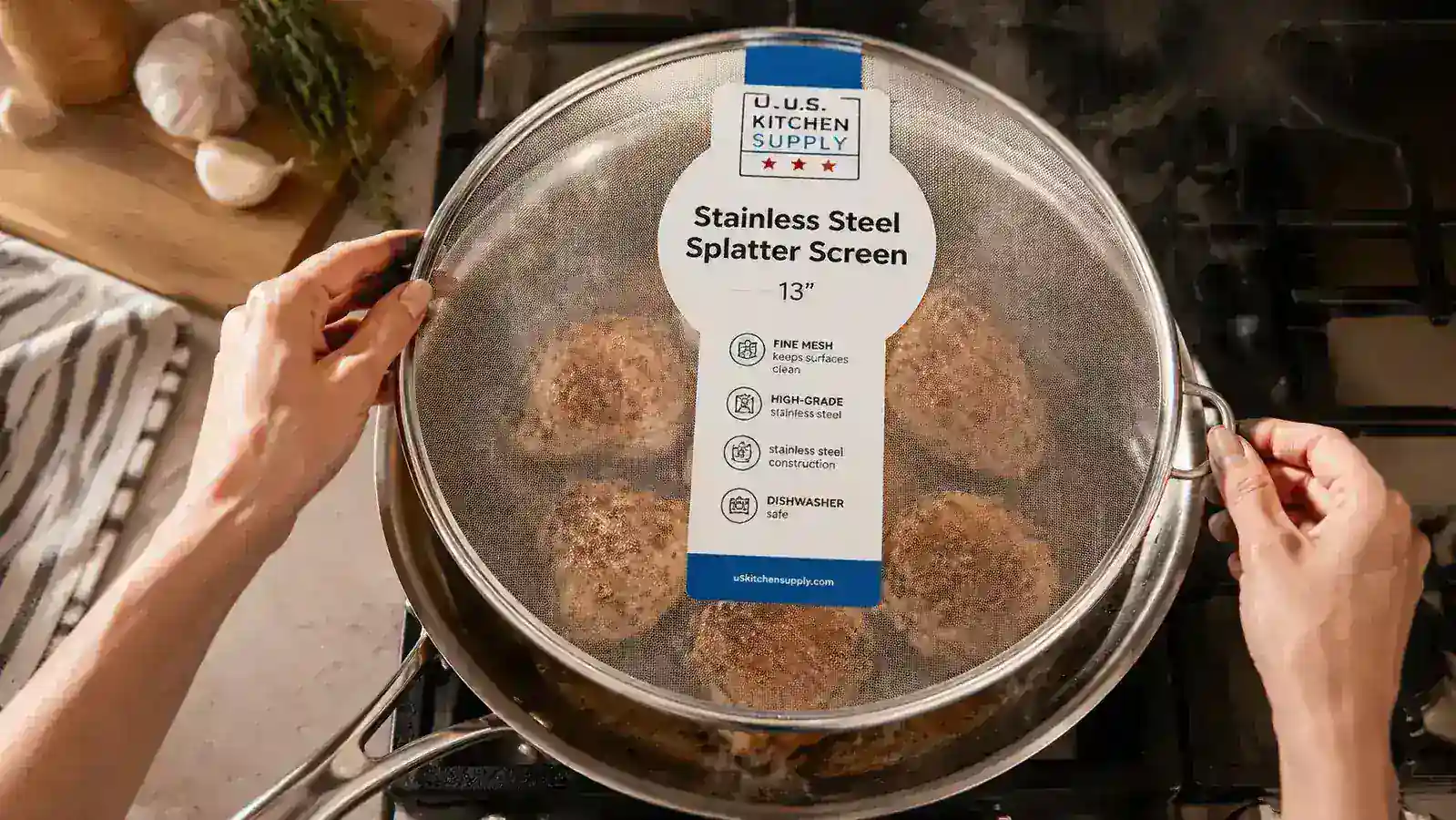
The set-of-three sizing is also worth calling out. One of the persistent frustrations with pan lids is that they only work if you have the exact lid for the exact pan. The U.S. Kitchen Supply set comes in 13-inch, 11.5-inch, and 9.5-inch. That covers my 12-inch cast iron, my 10-inch nonstick, and my 9-inch stainless all at once. I do not have to hunt for a matching lid before I start cooking, and I do not have to use a lid that is two sizes too small and lets grease fly around the edges.
If your stovetop is taking the real damage every time you fry, this is the fix.
The U.S. Kitchen Supply splatter screen set (4.7 stars, 11,000+ reviews) comes in three sizes to fit every pan in your kitchen. See today's price on Amazon.
Amazon Check Today's Price on Amazon →Where a Pan Lid Wins
A solid pan lid is the right tool when the goal is to cook through, not to brown. Pork chops that need an internal temperature of 145 degrees Fahrenheit benefit from trapped heat finishing them evenly after the initial sear. Eggs fried over-easy in butter can go over-medium without flipping if you put a lid on for thirty seconds. Braised dishes where you want liquid to reduce slowly on the stovetop need a lid to maintain a simmer without evaporating the cooking liquid too fast. For those tasks, the steam a lid traps is a feature, not a problem.
The lid also wins when you are specifically trying to braise or stew something that does not care about crust. A lid keeps the temperature more consistent across the surface and shortens total cooking time because less heat escapes. If you are making shakshuka, poached eggs in tomato sauce, or a stovetop braise, reach for the lid. The splatter screen will not do anything useful for those applications because you want the moisture trapped, not vented.
The lid traps steam you need to get rid of. A splatter screen lets you fry the way the pan was designed to fry, without covering your stovetop in the process.
The Steam Problem Nobody Talks About
Most home cooks reach for a lid by instinct when they hear oil popping, because it feels like the obvious move. But there is a real cost to that habit. When you cover a pan of frying chicken or bacon with a solid lid, condensation builds almost immediately on the inside of the glass or stainless. That condensation drips back down into the hot oil. The result is a splatter event right when you lift the lid, worse than if you had left the pan open the whole time. I learned this the hard way with bacon early on. I covered it to control the mess, lifted the lid at two minutes, and sent a spray of hot grease across the burner grates.
A splatter screen sidesteps the condensation problem entirely. There is nowhere for moisture to accumulate. Vapor moves upward through the mesh and dissipates into the kitchen air. The oil in the pan stays hotter and more stable because you are not constantly introducing water droplets. This matters for cooking quality as much as it matters for cleanup.
Cleanup Reality
Pan lids look easy to clean until you examine the inside surface after a frying session. Condensed grease coats the inside of the lid glass or stainless and often bakes onto the rim where the lid rested on the hot pan. That ring of cooked grease needs real scrubbing, especially if you set the lid down on the stovetop and it picks up any residual heat from the burner surface. The underside of glass lids in particular collects a greasy film that requires dish soap and a sponge every single time.
The U.S. Kitchen Supply splatter screen is dishwasher safe, and because the grease hits a flat mesh rather than pooling on a curved solid surface, it wipes clean quickly even by hand. I run it through the dishwasher once a week and hand-rinse it after everyday use. The long handle keeps my knuckles away from the hot pan rim when I set it down on the counter. That is a small thing, but after years of burning the back of my hand on glass lid knobs, I notice the difference every time.
Who Should Buy Which
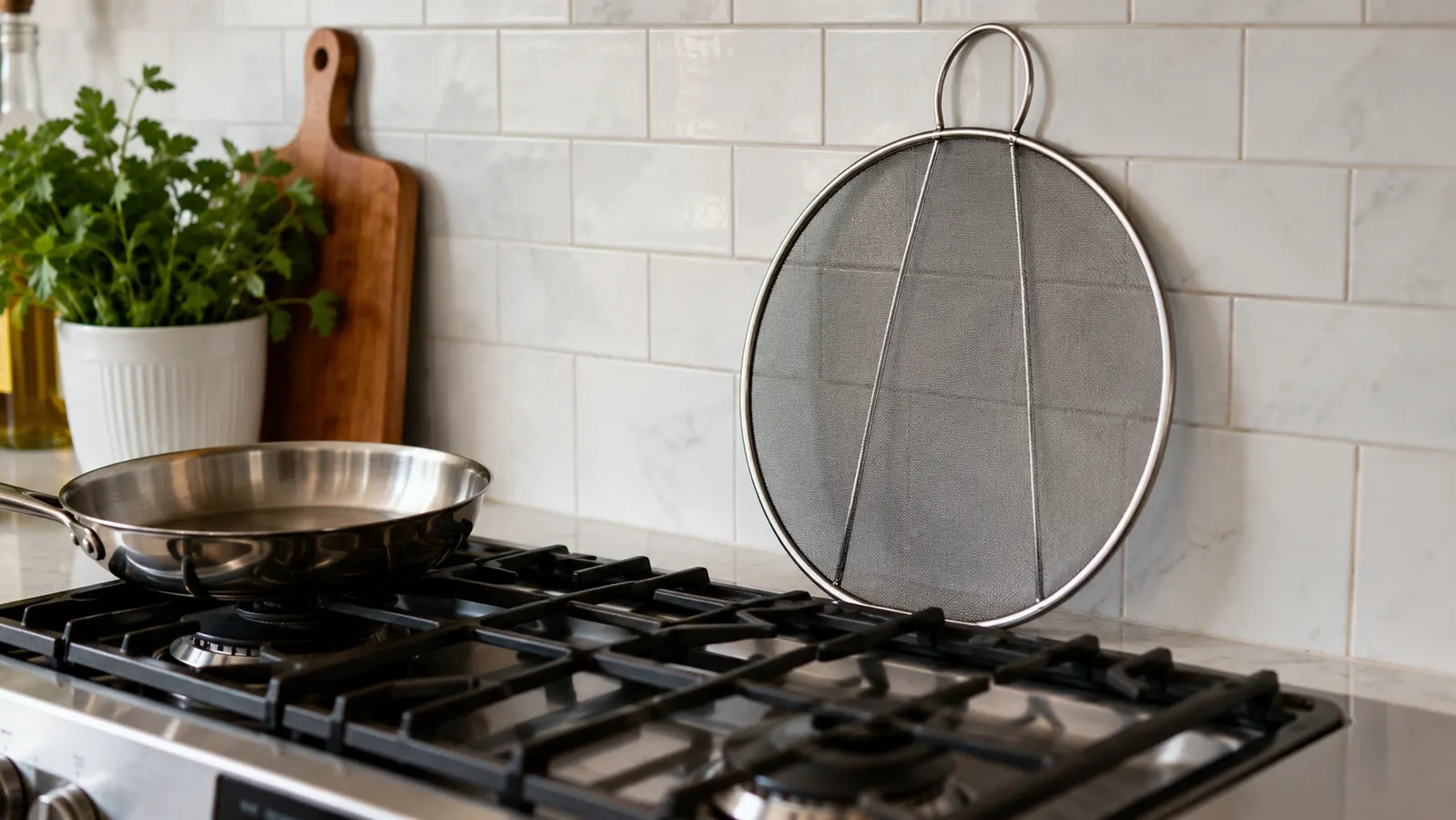
If you fry bacon, eggs, chicken thighs, burgers, or anything else where you want a browned surface and a clean stovetop, a splatter screen is the right tool to own. The U.S. Kitchen Supply set costs less than a single quality pan lid, fits every pan you own, stores flat, and does the job it promises. That is a strong case for having it in the drawer regardless of whatever lids you already own.
A pan lid belongs in your kitchen for braising, steaming, and finishing dishes over low heat. If you do not own lids already, the cheapest universal glass lids from the same kitchen supply category will do the job. But if you are reaching for a lid specifically to manage grease splatter while pan-frying, you are using the wrong tool for the job and your stovetop and your food will both suffer for it. Get the splatter screen for frying. Keep the lid for everything else.
One more thing worth saying plainly: you do not have to choose between them. Owning both costs less than most single cookware items and gives you the right tool for every job. But if you are only adding one item to the drawer today because you are tired of scrubbing grease off your stovetop after every fry session, start with the splatter screen. That is the problem it was built to solve.
Stop wiping down the stovetop after every fry. One set covers every pan you own.
The U.S. Kitchen Supply 3-piece stainless steel splatter screen set has 4.7 stars from more than 11,000 home cooks. Three sizes, dishwasher safe, built to last. Check today's price on Amazon.
Amazon Check Today's Price on Amazon →