
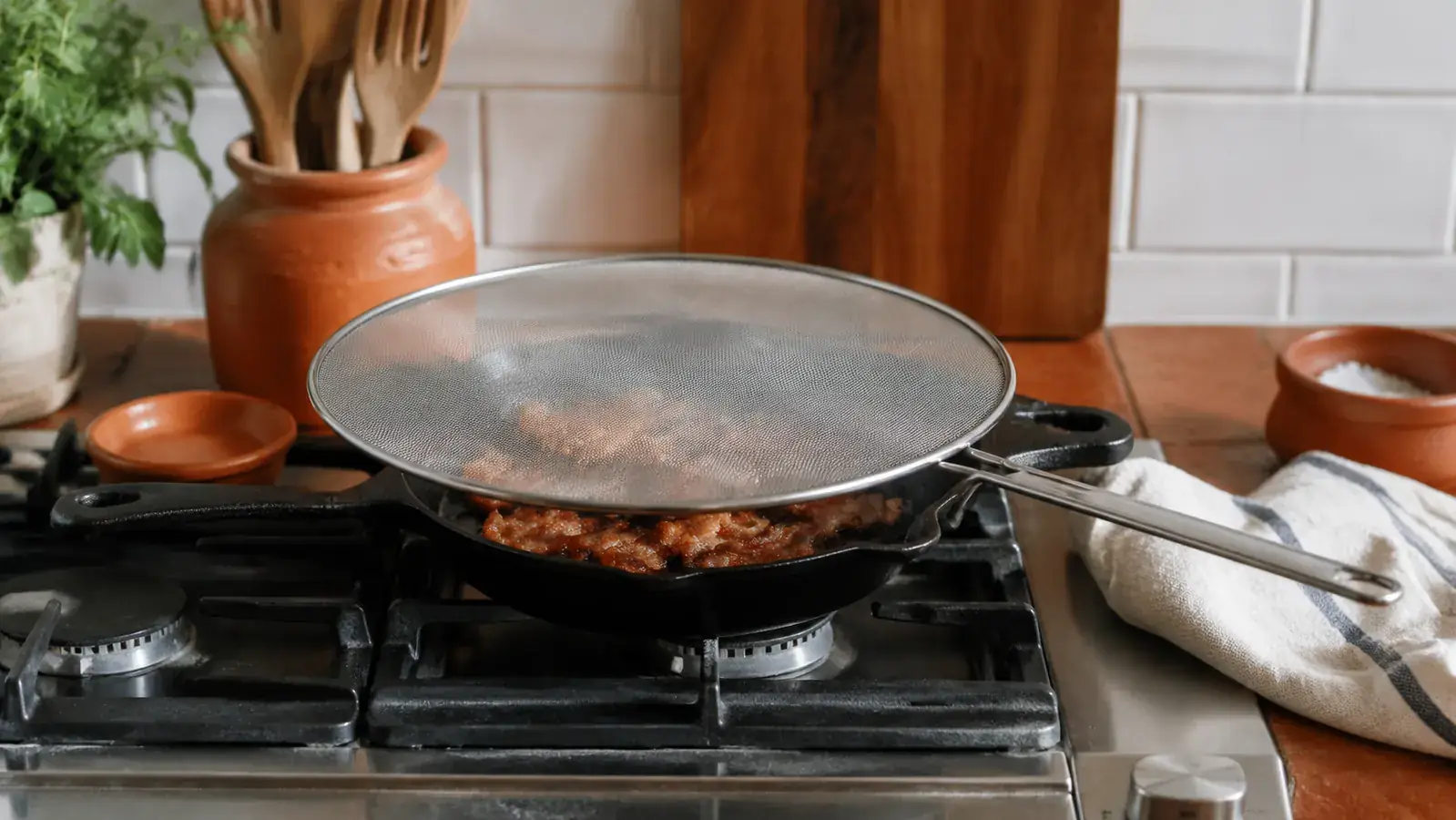
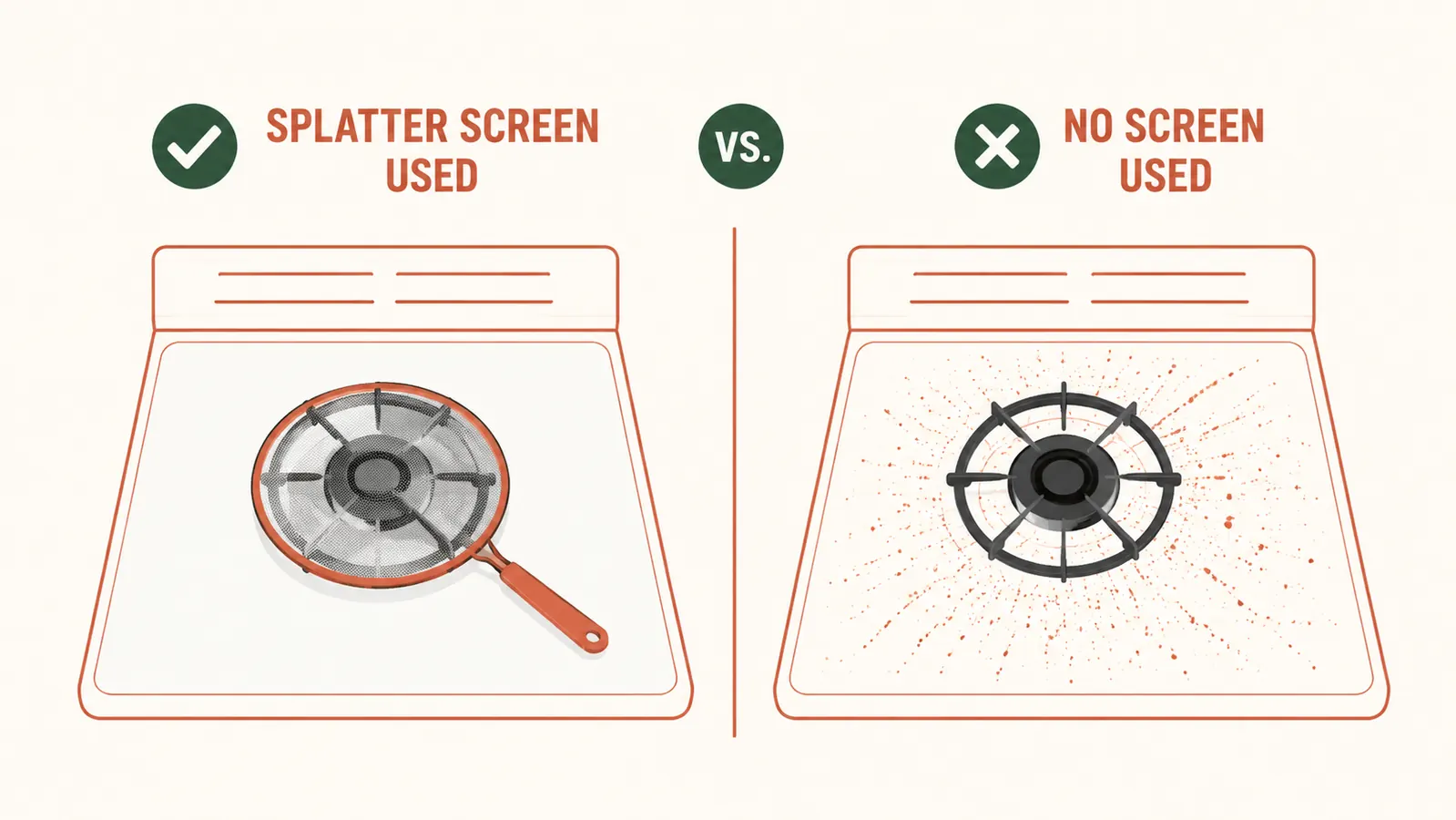
If you fry anything, you already know the routine. You get the pan hot, you add oil, you start cooking, and within 90 seconds the stovetop looks like a crime scene. Grease on the burner grates. Grease on the backsplash. A fine mist of it on your forearm if you leaned in too close. Then the food is done and before you can enjoy it, you are standing there with a roll of paper towels trying to get ahead of the mess before it bakes onto the enamel. I fried chicken thighs and bacon probably three or four nights a week for years, and this was just accepted as part of the deal. It is not part of the deal. You just need a splatter screen.
A splatter screen is a round, fine-mesh disc with a handle. You rest it over the pan while things cook. Hot oil still hits the mesh, but instead of launching across your kitchen it falls back into the pan. Steam vents through the mesh so your food keeps browning instead of steaming. The whole setup takes three seconds to place and cuts cleanup from ten minutes to almost nothing. The U.S. Kitchen Supply stainless steel splatter screen set comes in three sizes -- 13, 11.5, and 9.5 inches -- so you have the right fit regardless of which pan you reach for. This guide walks through every step so you get the most out of one from the first time you use it.
Tired of scrubbing grease off the same burner grate every single week?
The U.S. Kitchen Supply splatter screen set comes in three sizes (13, 11.5, and 9.5 inch) so you have the right fit for every pan you own. Stainless steel mesh, dishwasher safe, and affordable for all three.
Amazon Check Today's Price on Amazon →Step 1: Match the Screen to Your Pan
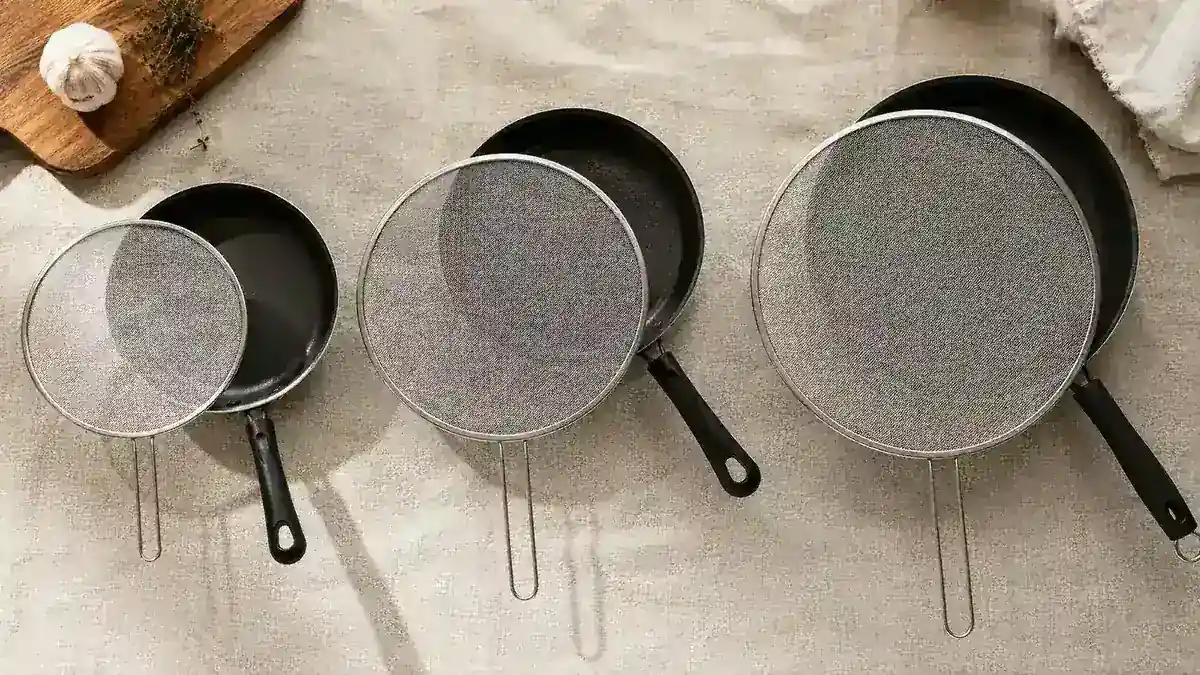
The most common mistake people make with splatter screens is using one that is too small. If the screen does not fully cover the pan opening, grease escapes from the gap around the rim and lands exactly where you were trying to prevent it. The rule is simple: the screen should be at least as wide as the top interior diameter of your pan, and slightly larger is better than slightly smaller.
For reference: a 12-inch skillet needs a 13-inch screen. A 10-inch saute pan works with an 11.5-inch screen. A small 8-inch pan for a fried egg takes the 9.5-inch screen. The U.S. Kitchen Supply set includes all three sizes in one box, so if you cook with a range of pans you are covered without guessing. If you only own one main frying pan, measure the interior diameter before buying anything and get a screen that matches or exceeds it.
If you have a cast iron skillet, note that cast iron retains heat well and tends to spit more aggressively when wet food hits the hot surface. Size up when in doubt. A 13-inch screen over a 12-inch cast iron is a much better situation than a 12-inch screen that sits inside the rim and lets grease escape from all sides. Woks are the one exception -- a wok's sloping sides make any flat screen sit at an angle. For a wok, a lid or a larger flat screen is a better fit.
Also pay attention to mesh density when evaluating any screen. A coarser mesh lets more fine oil mist through. The stainless steel mesh on the U.S. Kitchen Supply screens is tight enough to catch the fine spray that most cheap aluminum-rim screens miss. Hold it up to a light source before your first use and you should see a dense, even grid with no obvious gaps or loose weave spots.
Step 2: Heat the Pan and Oil Correctly First
A splatter screen controls grease that is already flying. It does not fix the root cause of excessive splatter, which is usually adding food to oil that is either too hot or too cold. If the oil is not hot enough, food sticks, and when it releases it takes a pool of oil with it. If the oil is too hot, it flashes to a boil around wet food and spits in every direction.
The right approach: heat the dry pan over medium or medium-high for about 90 seconds before adding oil. Add the oil and let it heat for another 30 to 45 seconds until it shimmers slightly but does not smoke. Pat the food as dry as possible with a paper towel before it goes in. Dry food hitting properly heated oil splatters far less than wet food hitting oil at the wrong temperature. The screen catches what does escape, but less splatter to begin with means an even easier cleanup.
For bacon specifically: start in a cold pan, raise the heat slowly to medium, and lay the strips flat before the pan gets hot. Bacon in a cold pan renders the fat gradually and splatters significantly less than bacon dropped into a screaming hot skillet. The screen still goes on, but the combination of proper technique and the screen keeps things genuinely under control. For chicken thighs or pork chops, pat them completely dry and season before they go in. Any surface moisture is what causes the violent spitting that sends oil three feet in every direction.
Step 3: Place the Splatter Screen Before the Oil Gets Loud
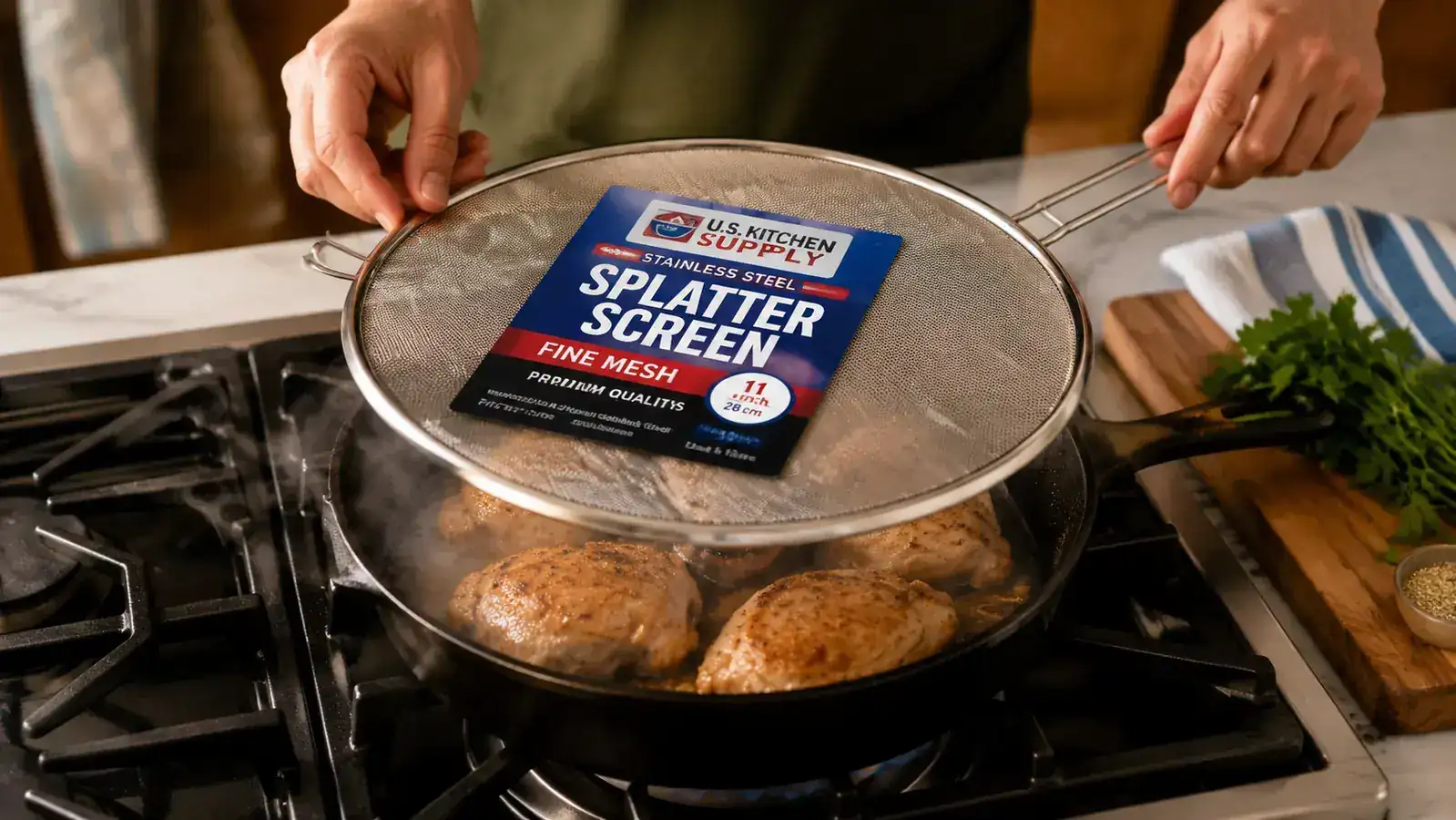
Timing matters here. A lot of people add food, hear splattering start, and then reach for the screen as an afterthought. By that point grease is already on the stove. Get the screen positioned as soon as the food goes in, ideally within the first ten seconds. The first burst of spattering when cold or wet food hits hot oil is often the most aggressive, and that is exactly the window you want the screen in place for.
Set the screen flat on the rim of the pan with the handle extending away from you, off to the side rather than pointing at the burner controls. The handle will get warm but not dangerously hot if it is stainless steel with a heat-resistant grip. With the U.S. Kitchen Supply screens the handle has a rubber end cap that stays cool enough to touch barehanded for a standard fry session. You do not need tongs or an oven mitt to lift it, but give it a quick check with a fingertip if you have been frying at high heat for more than ten minutes straight.
If you are frying on an electric or induction cooktop instead of gas, the pan sits flat and stable, which makes screen placement even easier. On a gas burner with heavy cast iron grates, make sure the screen is resting on the pan rim itself, not balanced across the grates, so it stays level and covers the full opening.
Step 4: Leave the Screen on for the Full Cook
The screen vents steam through the mesh, which is the whole reason food still browns under it. You do not need to lift it to let steam escape. If you keep picking the screen up to check the food, you are letting splatter escape every time, and you defeat the purpose. Trust the mesh. You can see through it well enough to watch browning progress without removing it, especially once you have done it a few times and know what browning chicken skin looks and smells like at the right point.
The only time you need to lift the screen is when you flip the food or stir the pan. For a flip, lift the screen with one hand, flip or stir quickly with the other, and set the screen back immediately. Practice this once and it becomes automatic. The whole maneuver takes about three seconds. Keep the screen in place every other moment during the cook.
One thing the screen does not do: it does not completely seal the pan. A small amount of moisture and vapor still escapes around the rim, which is by design. A total seal would trap steam and turn your fried chicken into steamed chicken. The mesh lets the pan breathe while blocking the oil. You are looking for a clean stovetop, not an oven effect. If you want to compare this approach against just using a lid, the splatter screen vs lid comparison covers both methods in depth.
The first ten seconds after wet food hits hot oil produce most of the splatter you spend minutes cleaning up later. The screen has to be on before that window opens, not after.
Step 5: Clean the Screen Right After Cooking
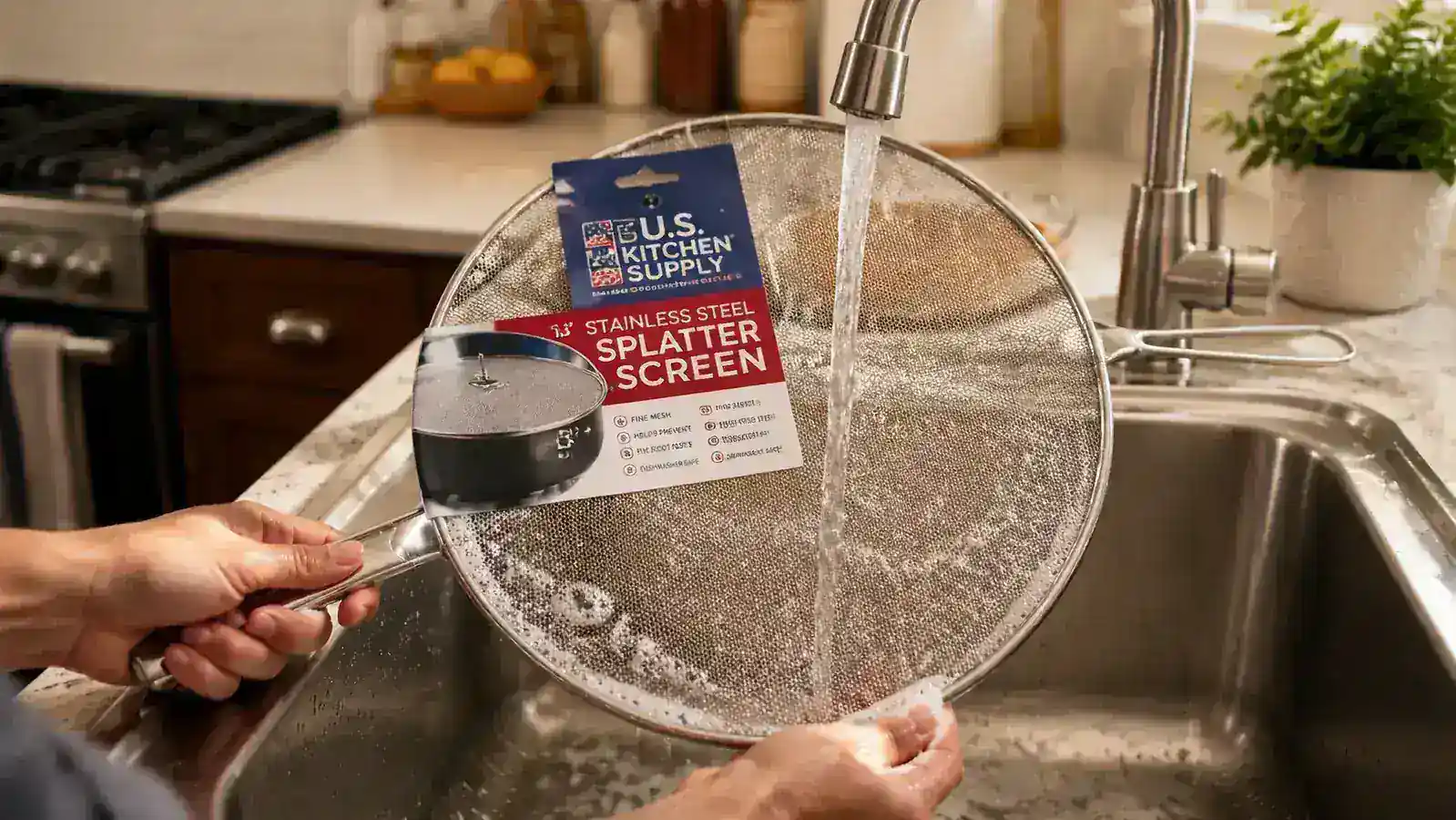
Splatter screens are easiest to clean when they are still warm, not searing hot. Once the pan is off the heat and the food is plated, give the screen about two minutes to cool slightly, then rinse it under hot running water. Most of the grease runs right off. A small drop of dish soap and a quick pass with a sponge handles anything that did not rinse away.
The U.S. Kitchen Supply screens are dishwasher safe, and they hold up fine on the top rack. The mesh stays flat, the handle does not warp, and the rim does not discolor after repeated cycles. If you run a dishwasher after dinner anyway, just drop the screen in. If you wash by hand, the fine mesh does occasionally trap tiny food bits from something like a spatter of egg white or a fragment of herb. A soft-bristle brush, the kind designed for bottle cleaning or even a spare toothbrush, clears those out in about 15 seconds.
Do not let grease cool and solidify on the mesh before washing. Baked-on grease is the one thing that makes any screen harder to clean than it needs to be. A two-minute rinse right after dinner takes care of everything. Waiting until the next morning is where cleanup gets frustrating, and you end up needing the brush even for minor splatter. Build the habit of rinsing right after plating and the screen practically takes care of itself.
What Else Helps Keep Frying Clean
The splatter screen handles the airborne grease problem, but a couple of companion habits make the whole experience cleaner. First, keep a folded kitchen towel or a small sheet of paper towel next to the stove while you cook. Any small drip from lifting the screen or moving food around gets blotted immediately before it has a chance to bake onto the stove surface. Second, wipe the stovetop with a damp cloth right after the burner cools, not after dinner is over and the grease has had an hour to set. These two habits combined with a splatter screen reduce post-cooking stovetop time to under two minutes most nights.
It also helps to keep your splatter screens stored where you can actually grab them. Most people own one screen they stuffed in a cabinet years ago and can never find when they need it. Hanging screens on a hook next to the stove, or storing them upright in a pan rack with your skillets, means you never skip using one because you forgot where it was. The U.S. Kitchen Supply set comes with three screens that nest together flat, so they do not take up much cabinet space even if you do not have a dedicated rack.
One more thing worth knowing: a splatter screen also works well for shallow-frying breaded cutlets and fish fillets, not just bacon and chicken thighs. Any time you have a thin layer of oil in a pan and wet or breaded food going in, the screen belongs on top. Even sauteing vegetables in a high-heat stir-fry situation benefits from a screen in the first 30 seconds when the vegetables release moisture. The screen earns its drawer space far faster than most single-use gadgets do.
If you want a longer look at how the U.S. Kitchen Supply set held up over months of regular frying, the long-term splatter screen review covers durability, mesh performance, and whether the handles hold up to daily use.
One set of screens covers every pan you own and makes stovetop cleanup almost effortless.
The U.S. Kitchen Supply 3-piece splatter screen set (13, 11.5, and 9.5 inch) has over 11,000 ratings and a 4.7-star average. Stainless steel mesh, dishwasher safe, and sized to fit the pans most home cooks already have.
Amazon Check Today's Price on Amazon →