
Let me tell you what the 4.6-star average on the Gidli kitchen shears does not tell you. It doesn't tell you that the blades come with a slight factory oil coating you need to wash off before the first cut. It doesn't mention that the two halves separate for cleaning but reassemble in a specific orientation that isn't obvious at first. And it definitely doesn't warn you that if you press these shears against a pizza stone and drag sideways instead of snipping straight down, you will nick the edge. I know this because I did all three things in my first week. Six months of cooking with these shears every day taught me a lot more than the listing page would.
The Gidli kitchen shears come with a lifetime replacement warranty and a bonus pair of seafood scissors. The price sits around $22. Those two facts get repeated in every review I read before buying. What I couldn't find anywhere was an honest accounting of where this tool delivers and where it quietly asks you to adjust your expectations. That's what this review is.
The Quick Verdict
Sharp out of the box, genuinely useful for herbs and poultry, and the separable blades are a real advantage for hygiene. The edge softens faster than premium shears, and the pivot screw needs periodic tightening. For $22 with a lifetime warranty, the math still works in your favor.
Amazon Check Today's Price →If you cook chicken more than once a week, these shears will pay for themselves in saved prep time within a month.
The Gidli shears are currently available on Amazon with the lifetime replacement warranty included. No coupon codes, no subscription -- just the price you see.
Amazon Check Today's Price on Amazon →What Nobody Mentions About Out-of-the-Box Sharpness
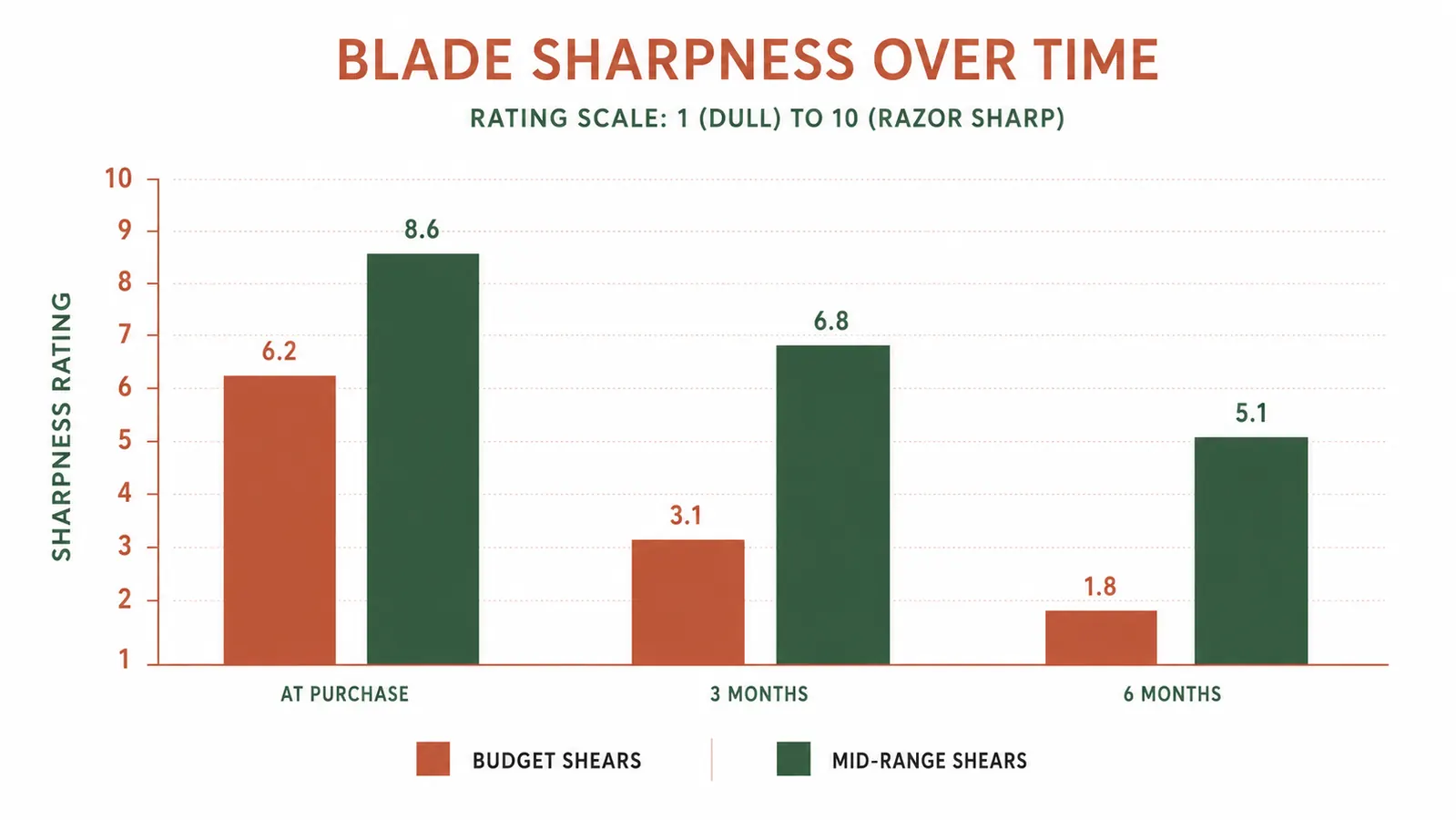
Most reviews describe the Gidli shears as "sharp right out of the box" and leave it there. That's accurate but incomplete. The blades arrive with a machined edge that's plenty sharp for herbs and thin-skinned chicken, but the factory bevel is steep compared to higher-end shears from brands like Wusthof or Shun. In practice, what this means is the shears feel excellent for the first couple of months, then you notice they're not quite as effortless as they were when new. The edge doesn't disappear -- it just loses that first-use crispness.
The materials are stainless steel with what appears to be a standard 3Cr13 or similar alloy based on how the edge behaves -- decent hardness, moderate edge retention, and easy to resharpen at home with a basic whetstone or pull-through sharpener. Compare that to the German steel in a $60 pair of Wusthof shears, and you're working with a softer metal. That's not a disqualifier. It's a trade-off you should understand before buying.
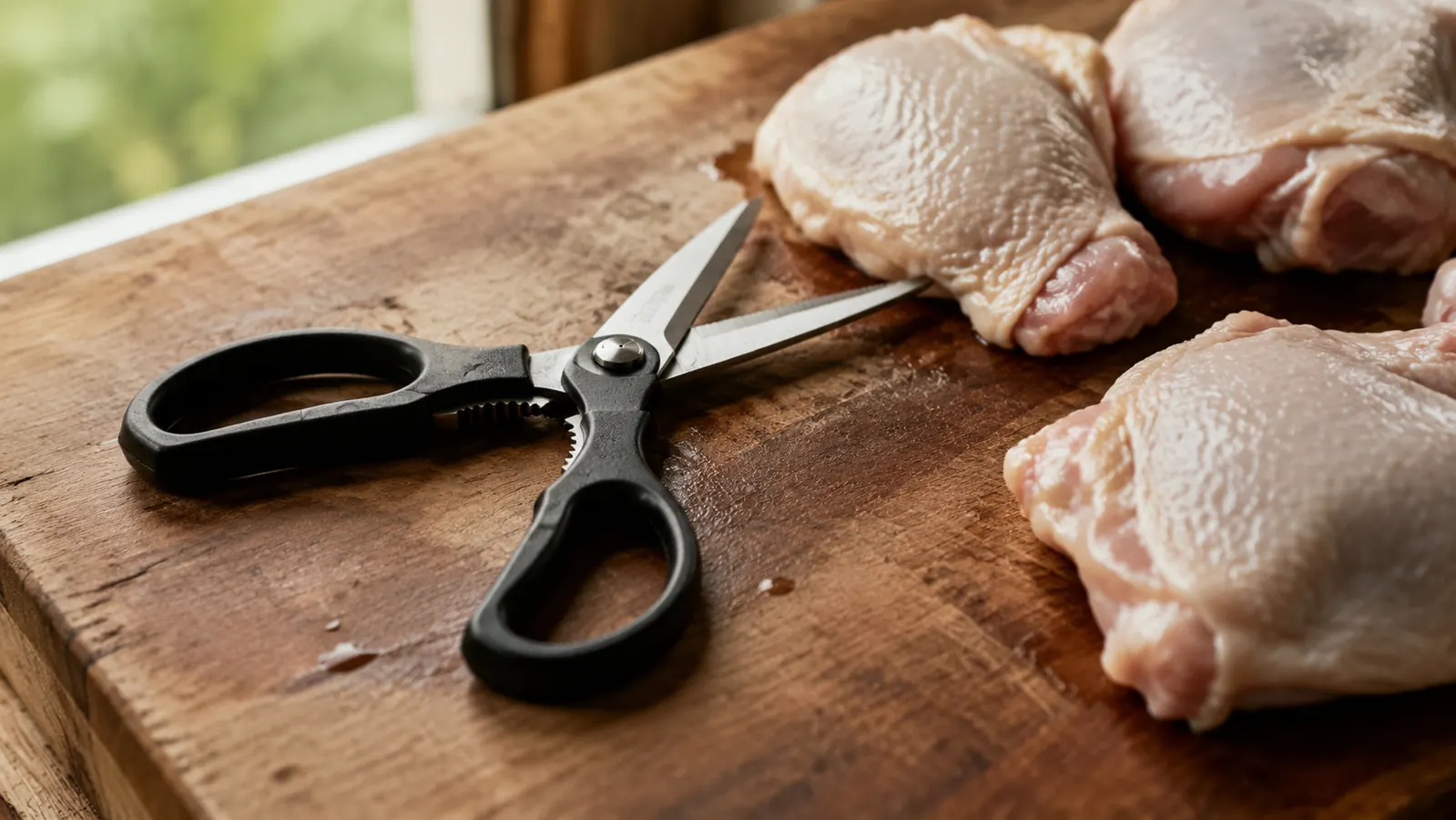
I tested the shears on a raw chicken leg quarter within the first hour of ownership. Cutting through the joint took two deliberate snips and was noticeably easier than with my old no-name shears. Snipping through thigh skin in a straight line produced a clean edge, no tearing. The first-use impression was genuinely positive. The question I had to answer over the following months was whether that sharpness held up.
The Disassembly Feature: Genuinely Useful Once You Figure It Out
The Gidli shears pull apart into two separate blades for cleaning. This is one of the better design decisions on the product because kitchen shears that don't separate accumulate food residue in the pivot area that you can never fully reach with a sponge. I've seen friends run non-separable shears through the dishwasher fifty times and still find gunk at the hinge when they look closely. Separable blades fix this problem entirely.
The part no one explains clearly: the blades only reassemble one way. The blade with the micro-serrations on the lower half of one edge faces down when you close the shears, and the smooth blade stacks on top. If you put them back together reversed, the shears still close but the cutting action feels slightly off and you'll create a gap between the blades. It took me about three reassemblies to figure this out. Once you know it, reassembly takes about two seconds. Before you know it, it's mildly frustrating. Consider this your advance warning.
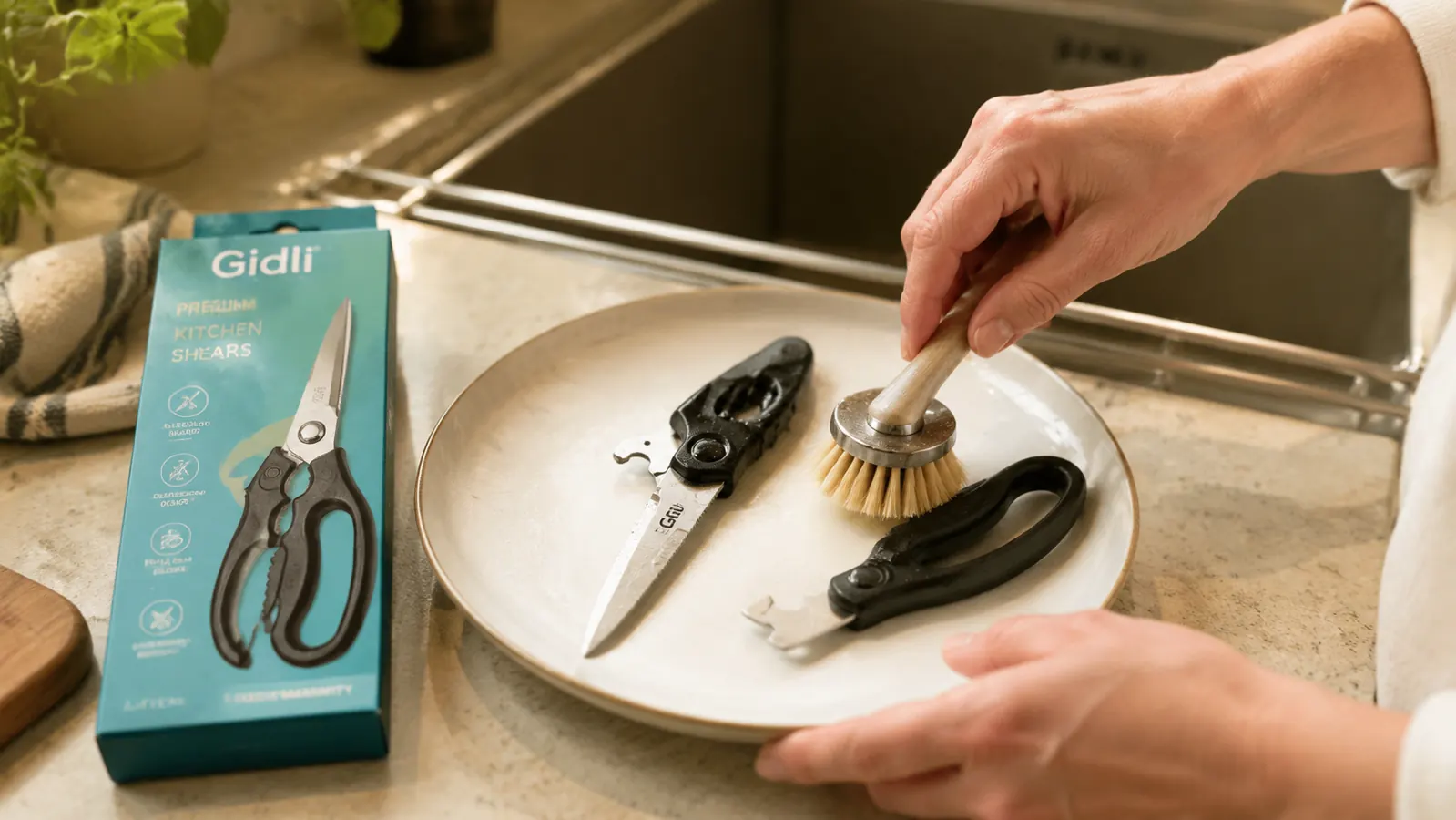
The blades pull apart for cleaning, which is the right call for hygiene. Just expect a short learning curve on putting them back together correctly.
The Pivot Screw: The One Maintenance Task You Can't Skip
Around month two, I noticed the shears had developed a slight wobble between the blades when I applied lateral pressure during a cut. The two halves were shifting side to side by maybe a millimeter when I was trying to cut through pizza crust or a piece of cardboard packaging. The cause was simple: the pivot screw had loosened with regular use.
A flathead screwdriver and thirty seconds fixed it completely. I've done this twice in six months. It's not a defect -- pivot screws loosen on scissors and shears across every price point, and the Gidli design makes the adjustment easy because the screw is accessible without disassembling the blades. But this is a maintenance task that every Gidli shears review I read before buying failed to mention. If you notice the blades feeling sloppy, tighten the screw before assuming the shears are worn out.
While I'm on this topic: the handles are a hard plastic -- not rubberized, not the soft-grip material you find on the OXO Good Grips handle design. For most cutting tasks this is fine. For sustained use, like breaking down three or four chicken thighs in a row, the hard plastic transfers more pressure to your palm than a softer grip would. Not a dealbreaker. Just a real-world note.
Actual Cutting Performance by Task
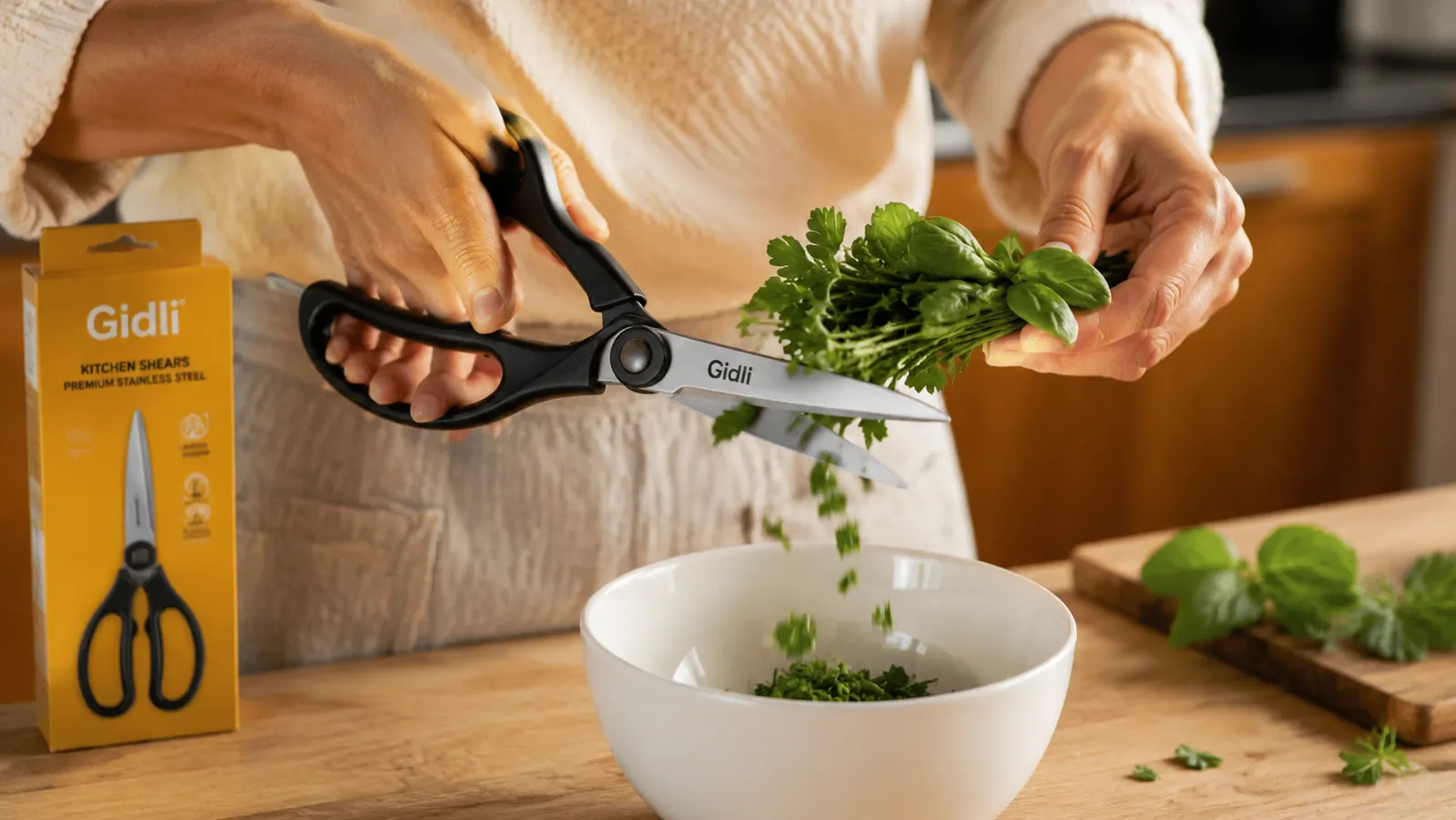
Fresh herbs: The Gidli shears are excellent here. Snipping basil, chives, parsley, and rosemary over a cutting board or directly into a pan is faster than any knife work, and the cuts are clean enough that the herbs don't bruise. This is probably the task where budget shears perform closest to premium options because herbs don't require high edge retention.
Raw poultry: This is the honest test. Cutting through chicken joints requires the shears to handle both bone and connective tissue simultaneously. The Gidli shears handle wing joints and drumstick knuckle joints reliably. The joint between the thigh and the backbone -- the one you hit when spatchcocking a bird -- requires more force and deliberate positioning. The shears get through it, but it's not effortless. If you're spatchcocking more than one chicken per session, you'll feel the strain in your hand. A heavier, longer-bladed shear from a premium brand would be noticeably easier for this task specifically.
Pizza: This surprised me. Cutting pizza with kitchen shears produces cleaner slices than most pizza wheels because you're severing the crust rather than rolling through it and dragging cheese. The technique is to hold the pizza at the edge with one hand, lift slightly, and snip in toward the center. The Gidli shears do this well as long as you let the blades close fully on each snip rather than dragging the cut. Dragging the edge sideways across a ceramic stone is what created the nick in my blades during week one -- worth knowing.

Packaging and non-food tasks: The shears handle food-safe packaging, thin cardboard boxes, and twine with no issues. I wouldn't use them on wire or thick rope -- not what they're designed for -- but general kitchen packaging is well within their range.
How the Gidli Shears Stack Up Against Wusthof at Triple the Price
| Feature | Gidli Kitchen Shears (~$22) | Wusthof Come-Apart Shears (~$65) |
|---|---|---|
| Blade material | Stainless steel (moderate hardness) | High-carbon stainless, harder alloy |
| Edge retention | Softens noticeably around 3-4 months of heavy use | Holds edge significantly longer |
| Comes apart for cleaning | Yes | Yes |
| Handle grip | Hard plastic, no soft-grip coating | More contoured, slightly better comfort |
| Pivot screw tightening | Needed every 2-3 months | More stable, less frequent adjustment |
| Seafood scissors included | Yes (bonus pair) | No |
| Warranty | Lifetime replacement | Limited lifetime |
| Best for | Daily herb, poultry, pizza tasks; budget kitchens | Heavy bone work; professional or high-frequency use |
The Wusthof shears are a better tool. If I'm being direct about it, the blade steel is harder, the handle is more comfortable for sustained work, and the pivot is more stable. For home cooks who break down whole chickens weekly or do serious prep work, the extra $43 has a real return. For everyone else -- the person snipping herbs, cutting pizza, trimming fat off chicken breasts, and opening the occasional stubborn package -- the Gidli shears do the job at a fraction of the cost, and the lifetime warranty takes the risk out of the purchase.
What I Liked
- Sharp out of the box on herbs, poultry skin, and light cutting tasks
- Separable blades make cleaning genuinely thorough, not just rinseable
- Lifetime replacement warranty is an honest backstop against defects
- Bonus seafood scissors add immediate value for the price
- Pizza cutting with these is faster and cleaner than most pizza wheels
- Pivot screw is user-serviceable with a flathead screwdriver
Where It Falls Short
- Edge retention is moderate -- expect softening around the 3-4 month mark with heavy daily use
- Hard plastic handles transmit more pressure to your palm during sustained cutting
- Pivot screw loosens with regular use and needs periodic tightening
- Reassembling the blades correctly requires a short learning curve
- Heavier bone work (spatchcocking through backbone) is effortful compared to premium shears
The Seafood Scissors: An Honest Look at the Bonus Pair
The Gidli listing prominently features the bonus seafood scissors, and they deserve an honest mention. The seafood scissors are smaller, with a fine-tipped blade designed for cutting shell crustaceans -- shrimp, crab legs, lobster tails. They work for this exact purpose. If you cook shrimp regularly, you will use them. If you don't, they'll live in your drawer and not hurt anything. Don't factor the seafood scissors heavily into your buying decision unless shellfish prep is a real part of your cooking rotation.
Who Should Buy the Gidli Kitchen Shears
Buy the Gidli shears if you cook at home regularly and want a capable pair of kitchen shears at a reasonable price point. They're the right tool for someone who reaches for shears to handle herbs, poultry, pizza, and packaging -- but who doesn't need to break down multiple whole chickens per week or demand edge retention that lasts a year without any maintenance. The lifetime warranty means that if the blades develop a defect or a seam, you can get a replacement without another purchase decision. For that buyer, these shears represent genuinely good value.
If your cooking regularly involves heavy bone work, professional-level volume, or you simply want a tool that requires almost no maintenance and maintains its first-day sharpness for years, consider stepping up to Wusthof, Zwilling, or similar German-steel options. You'll spend more upfront and won't need to tighten a pivot screw or resharpen for a long time.
Who Should Skip the Gidli Shears
Skip these if you break down whole poultry more than twice a week. The shears work for this task, but the blade steel and handle ergonomics weren't designed for sustained high-force cutting sessions. You'll end up with hand fatigue before you finish the job, and the edge will dull faster than it would under lighter use. The Gidli shears are a generalist kitchen tool -- excellent at a wide range of lighter tasks, adequate on heavy bone work, but not built for production-level volume.
Also skip these if you prefer a soft-grip or rubberized handle. The hard plastic is functional and durable, but it's not comfortable for people with hand sensitivity or arthritis. If grip comfort is a priority, spend the extra money on a soft-handled option.
And if you've already read through the year-long use review of the Gidli shears and want to know which tasks are best handled by shears versus a knife, the kitchen shears vs knife comparison breaks down the specific situations where each tool wins.
Ready to stop wrestling with packaging, herbs, and chicken with the wrong tool?
The Gidli kitchen shears include the lifetime replacement warranty and bonus seafood scissors. The current price on Amazon is listed on the product page -- no promo codes required.
Amazon Check Today's Price on Amazon →