
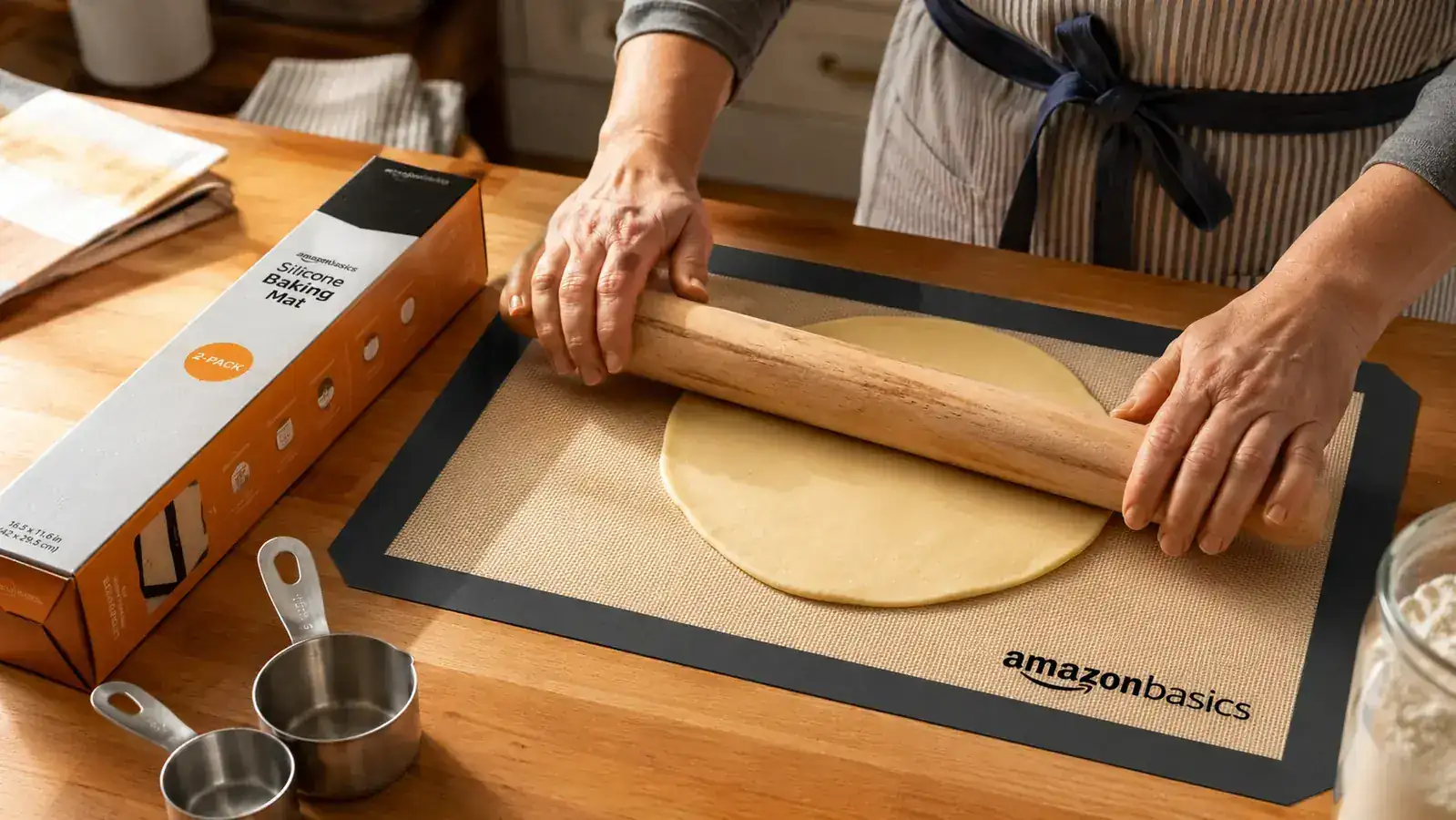
Let me be direct about what this review is not going to do. It is not going to tell you the Amazon Basics silicone baking mat is a miracle that will transform your cookies into bakery perfection. It is also not going to warn you away from a product that has 25,000-plus ratings averaging 4.7 stars. What I want to do is fill in the gaps between the glowing listing photos and the reality of what you are actually getting in the box, because there are a few things worth knowing before you buy.
I bought this mat specifically because I was skeptical. A silicone baking mat for under twelve dollars, carrying the Amazon house brand, going up against Silpat at four times the price. Either this was a genuinely good product at a genuinely low price, or the reviews were inflated by sheer volume and low expectations. After putting it through real baking use, including batches of cookies, roasted vegetables, and sticky glazed proteins, I have a clear answer. It is a good product with a few honest limitations, and knowing those limitations in advance makes all the difference.
The Quick Verdict
A legitimately solid baking mat at a price that removes all risk from trying one. The quality gap versus premium mats is real but smaller than the price gap suggests.
Amazon Check Today's Price →Tired of tossing burnt parchment paper after every bake? Here's what the switch actually costs.
The Amazon Basics silicone baking mat has over 25,000 ratings and typically runs under twelve dollars. It fits a standard half-sheet pan and is rated for temperatures up to 480 degrees Fahrenheit.
Amazon Check Today's Price on Amazon →What Nobody Warns You About Before You Buy
The first thing you notice when you open the package is the smell. New silicone has a faint chemical odor, and this mat is no exception. Most reviewers either do not mention it or wave it off, but it is real, especially when the mat first hits a hot oven. The smell fades after the first two or three bakes and completely disappears within a week of regular use. It is not a sign of a defective product. It is just what new food-grade silicone smells like, and knowing that in advance means you will not panic and try to return it after the first batch.
The second thing is the texture. The surface of this mat is slightly grippier than a Silpat. That is actually good for things like cookies, where you want the dough to sit still, but it does mean very thin crackers or delicate pastry can stick more than expected if you pull them off too early. The rule is simple: let whatever you are baking cool for three to five minutes on the mat before you try to lift it. At a hundred degrees, everything slides off. At two hundred degrees, some things cling. Patience is the technique here, not a product defect.
The smell on first use, the slight grip on delicate items, the way it wants to curl when you store it rolled: these are not dealbreakers. They are just the honest realities of owning a twelve-dollar silicone mat.
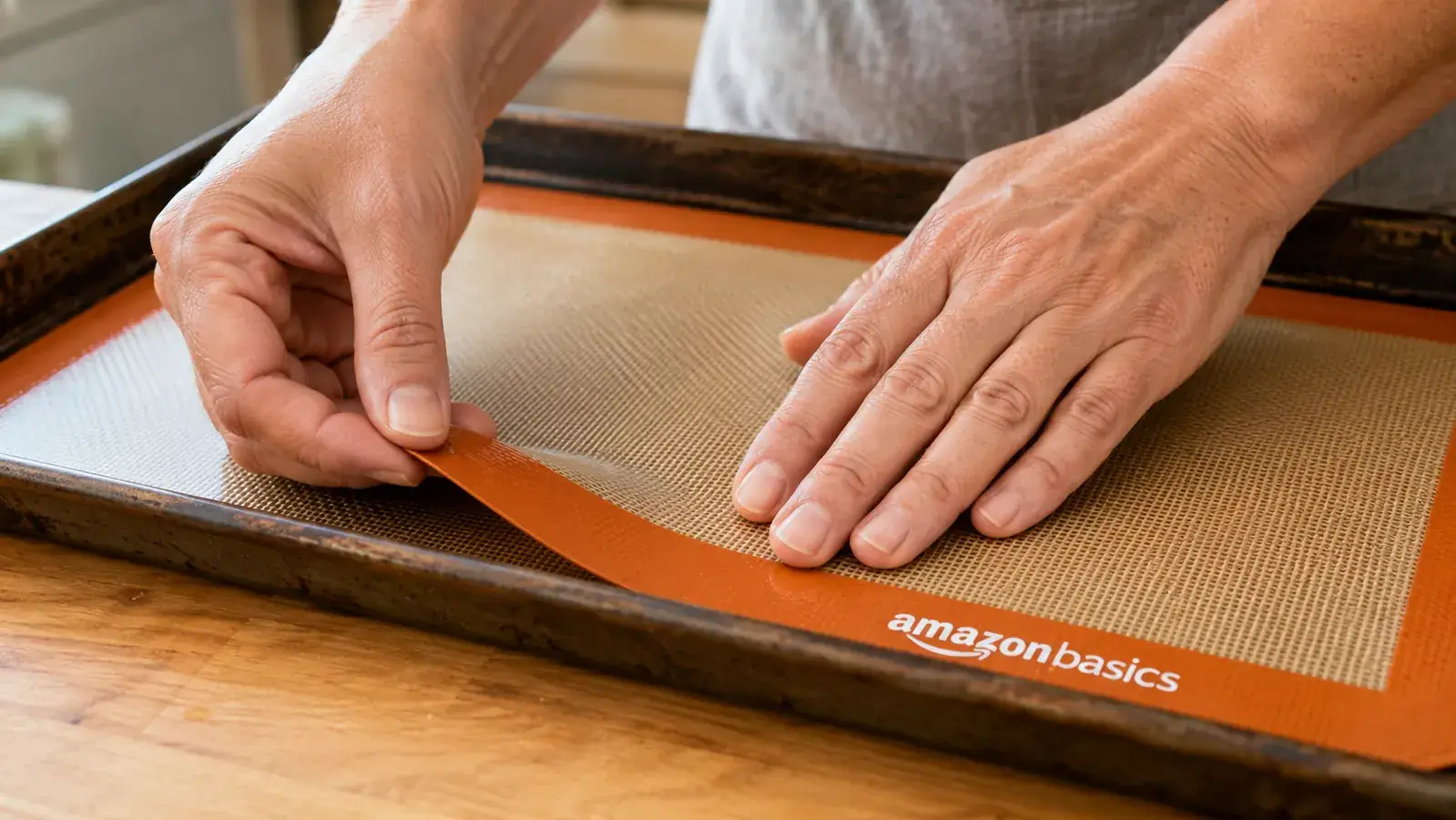
How I Tested It and What I Found
I ran this mat through six categories of baking and roasting over several weeks. Chocolate chip cookies, sugar cookies, roasted broccoli, bone-in chicken thighs with a honey glaze, homemade granola, and a batch of parmesan crisps. That last one is where the mat showed a limitation worth mentioning. Parmesan crisps need to be pulled off the surface while still slightly warm, not fully cooled, or they bond to the mat and break apart. A Silpat releases them a little easier because of its slightly smoother surface. For everything else on my list, the Amazon Basics mat performed identically to the pricier mats I have used.
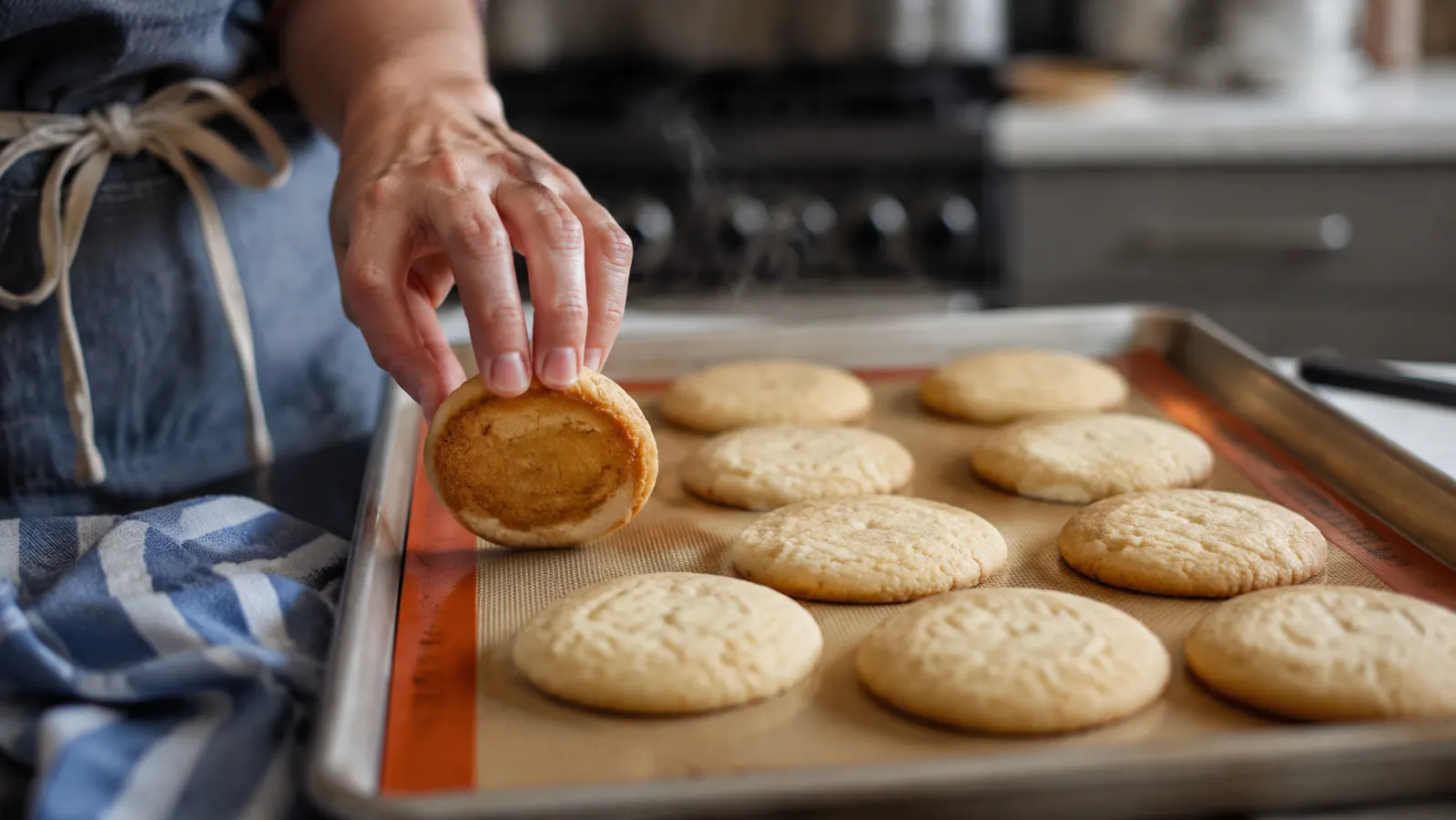
Cookie results were genuinely excellent. I baked the same recipe three times: once on a greased pan, once on parchment, and once on this mat. The mat batch had the most even browning, zero sticking, and the flattest spread. The bottoms were a consistent golden brown rather than the darker ring you sometimes get when a pan has hot spots. That consistent heat distribution is the silicone mat's main functional advantage, and it was obvious in side-by-side testing.
For roasted vegetables, the mat worked well at temperatures up to 425 degrees Fahrenheit, which covers most standard roasting needs. I did not test it at 480 degrees (the stated maximum) because that is above what most home ovens are accurate at anyway. At 425 degrees, the mat showed no warping, no discoloration, and no sign of degradation. It came out of the oven looking exactly as it went in.
The Warping Complaint (and Whether It Applies to You)
Scroll through the one and two-star reviews for this mat and you will find warping complaints. People say the mat curls up at the edges, that it will not lay flat, that it slides around the pan. Here is what is actually happening in most of those cases: the mat was stored rolled up tight or folded, and silicone has memory. If you keep it curled, it stays curled. The solution is to store it flat, either under your baking pans in a low drawer or slid vertically between pans in a cabinet. Once it sits flat for a day or two, it lays flat on the sheet pan. The mat I use sits under my half-sheet pan stack and I have never had a warping issue.
If your kitchen storage genuinely cannot accommodate flat storage (small apartment kitchens, I understand), this is a real limitation worth knowing. The mat will work rolled, but it will fight you a little at the edges. A pan with a slight rim will hold it in place well enough for most baking. It is not elegant, but it is workable.
Cleanup: Better Than the Reviews Suggest, With One Caveat
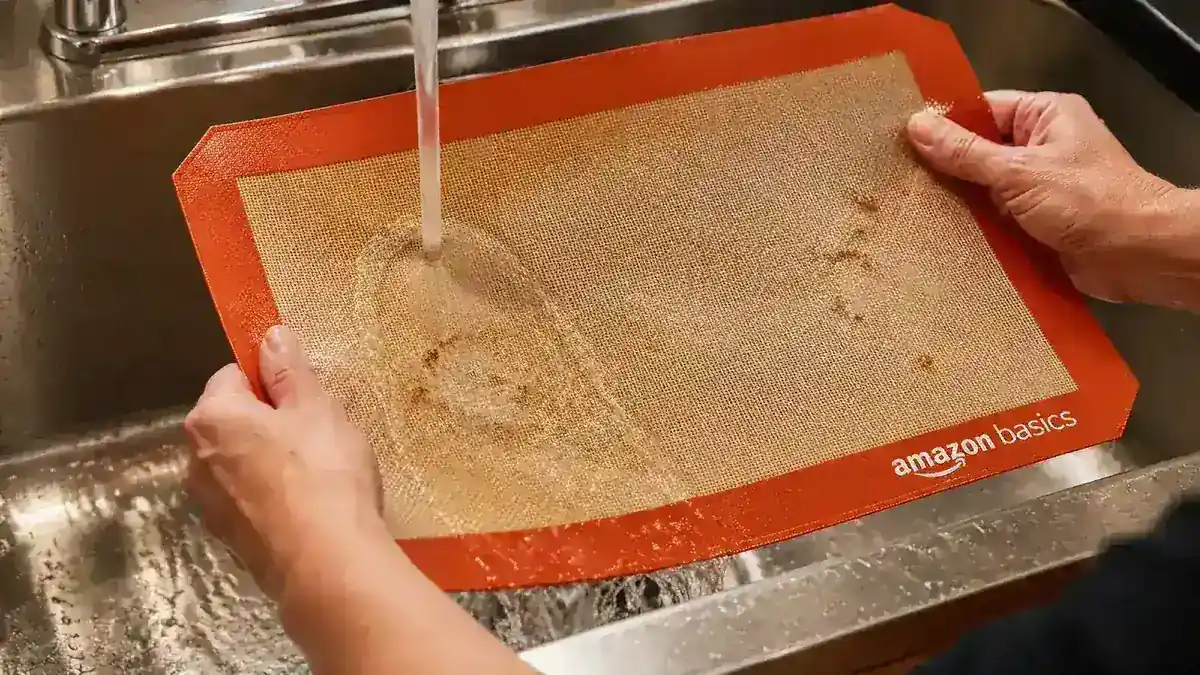
Most baking residue wipes off this mat with a damp cloth. Sugar and chocolate, which are the main culprits for sticking, rinse off under warm water with almost no scrubbing. I was impressed by how easily the mat cleaned after the honey-glazed chicken thighs, which left behind a caramelized glaze I expected to be stubborn. Warm water and a few seconds of gentle scrubbing with a soft sponge, and it was clean.
The one caveat: do not use this mat with anything heavily oil-based and then put it in the dishwasher repeatedly. Silicone can absorb oil over time, and dishwasher detergent does not fully strip it. After enough dishwasher cycles, the mat can develop a greasy feel that never fully goes away and can transfer a faint oily taste to baked goods. Hand washing with dish soap takes thirty seconds and keeps the mat performing cleanly for years. It is a small extra step, but it matters.
Amazon Basics vs Silpat: Is the Price Difference Worth It?
Silpat is the original French silicone baking mat and it is genuinely excellent. It is also four to five times the price of this Amazon Basics mat. For professional bakers or people who bake multiple batches daily, the smoother Silpat surface, tighter fiberglass weave, and more precise sizing can make a meaningful difference. For the home cook who bakes weekly or a few times a month, the functional gap is much smaller than the price gap.
The main practical differences I noticed: Silpat releases very sticky items (like the parmesan crisps I mentioned) slightly more easily. Silpat's measurements printed on the surface are more precise, which matters for candy-making where exact dimensions are important. Silpat is a little thicker and feels more substantial in hand. None of these differences changed the outcome of a single bake I did during testing. The cookies, vegetables, granola, and chicken looked and tasted the same off both mats. If you are not making pulled sugar candy or precision macarons, the Amazon Basics mat covers everything you will realistically bake at home.
I would add that if you are new to silicone baking mats entirely, starting with the Amazon Basics version makes a lot of sense. You are not committing to a product you have never tried. If you use it regularly and wish it were a little smoother or more precise, you can upgrade later having lost nothing on your first purchase. If you use it regularly and it serves you perfectly, you just saved money.
What I Liked
- Even browning on cookies and pastry that is noticeably better than greased pans or foil
- Cleans up in under a minute with warm water and mild dish soap
- Rated to 480 degrees Fahrenheit and handles everything a home oven will throw at it
- At under twelve dollars, zero financial risk to trying it for the first time
- 4.7 stars across more than 25,000 ratings signals broadly consistent quality
Where It Falls Short
- Faint chemical smell on first one to three uses (normal for new silicone, fades quickly)
- Slightly grippier surface than Silpat means delicate items need a few minutes to cool before releasing
- Must be stored flat or it develops a curl that requires a few days of flat storage to correct
- Repeated dishwasher use can cause oily residue buildup over time; hand wash is strongly recommended
A Few Comparisons Worth Making
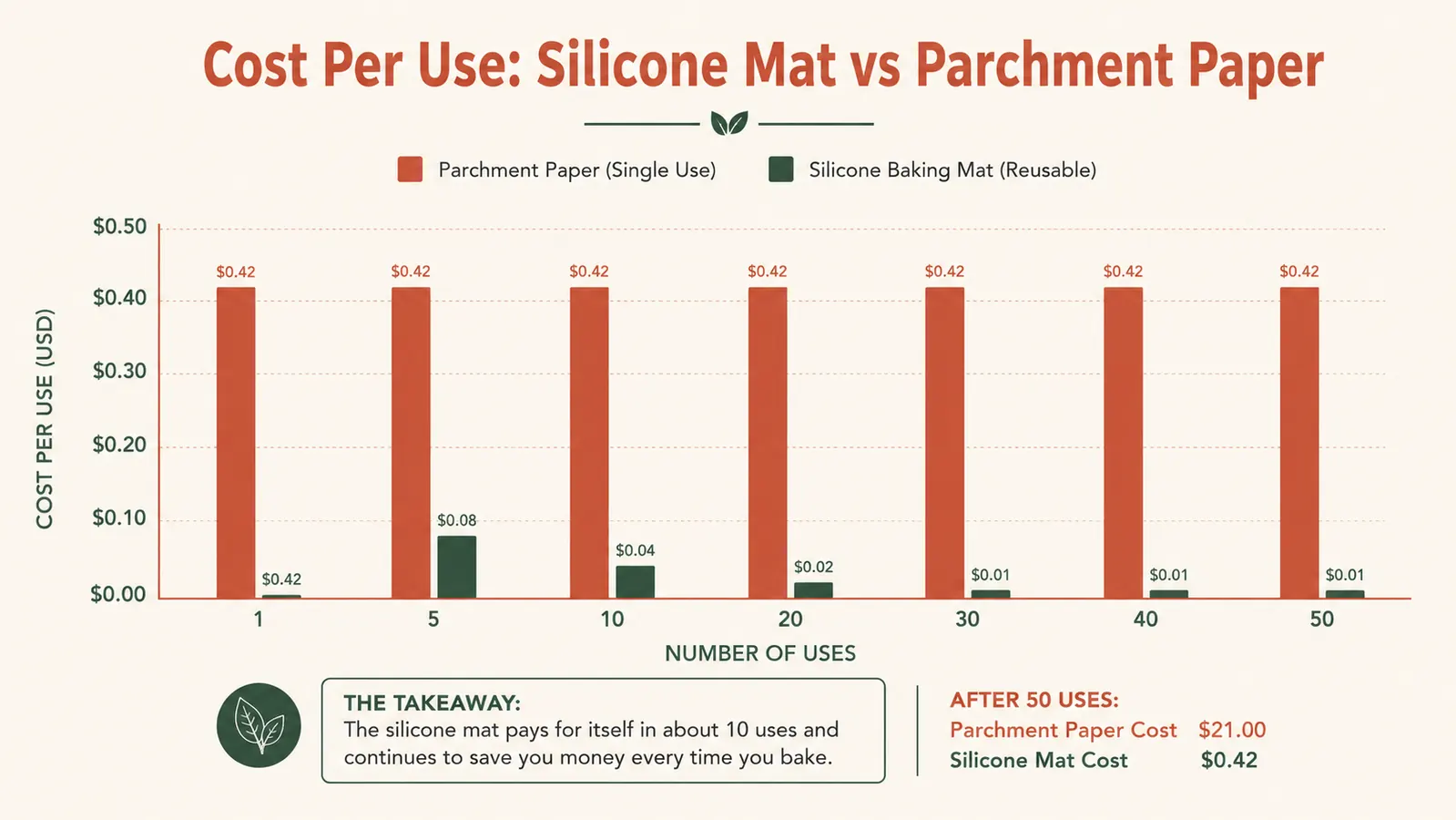
I want to address the two things I see most often in comparison shopping for this mat. First, versus parchment paper: parchment is still useful for jobs that require a surface you can cut to shape, like lining an oddly shaped pan or wrapping food. For everything that fits a standard half-sheet, the silicone mat wins on cost over time. A roll of parchment costs three to five dollars and gets you maybe forty uses. The silicone mat costs twelve dollars and is rated for thousands of uses. You break even around use number seventy-five, and after that the mat is free. For more detail on this comparison, the silicone mat vs parchment paper article on this site goes deeper on each use case.
Second, versus the generic no-name mats that show up for four or five dollars on marketplace listings: I have tried two of those. One discolored after six bakes and developed dark spots at the edges. The other was sized wrong and did not cover a standard half-sheet pan properly. The Amazon Basics mat is not the cheapest option available, but it is the cheapest I would actually recommend. The quality control gap between a recognizable brand and a true no-name silicone mat is meaningful at this price point.
Who This Is For
This mat is a strong choice for any home cook who bakes cookies, roasts vegetables, or makes granola at least a few times a month. It is especially well-suited to budget-conscious buyers who want to stop spending money on parchment paper and are curious whether the silicone mat upgrade is worth it. At this price, the answer is almost always yes. It is also a good first silicone mat for anyone who has never tried one and wants to test the format before committing to a premium option. You can see the long-term durability picture in the eight-month review, but most people will find this honest summary tells them everything they need to decide.
Who Should Skip It
If you bake professionally or semi-professionally, or you specifically make confections that require the smoothest possible release surface (pulled sugar, very thin florentines, precision macarons at volume), the Silpat is worth the extra investment. If you genuinely cannot store anything flat in your kitchen, the rolling storage problem will nag at you. And if you put every kitchen item in the dishwasher out of habit and do not want to change that, factor in the hand-wash requirement before buying. None of these are reasons most people will recognize in themselves, which is why the 4.7-star average is as high as it is. For the mainstream home baker, this mat simply works.
Ready to stop buying parchment paper every few weeks? The math on this mat pays off fast.
The Amazon Basics silicone baking mat fits a standard half-sheet pan, handles oven temperatures up to 480 degrees Fahrenheit, and cleans up in under a minute. Check the current price on Amazon before you decide.
Amazon Check Today's Price on Amazon →